Why Laparoscopic Surgery Is Preferred Over Open Surgery: Benefits for Patients and Surgeons
Why Laparoscopic Surgery Is Preferred Over Open Surgery: Benefits for Patients and Surgeons
Share:
Share
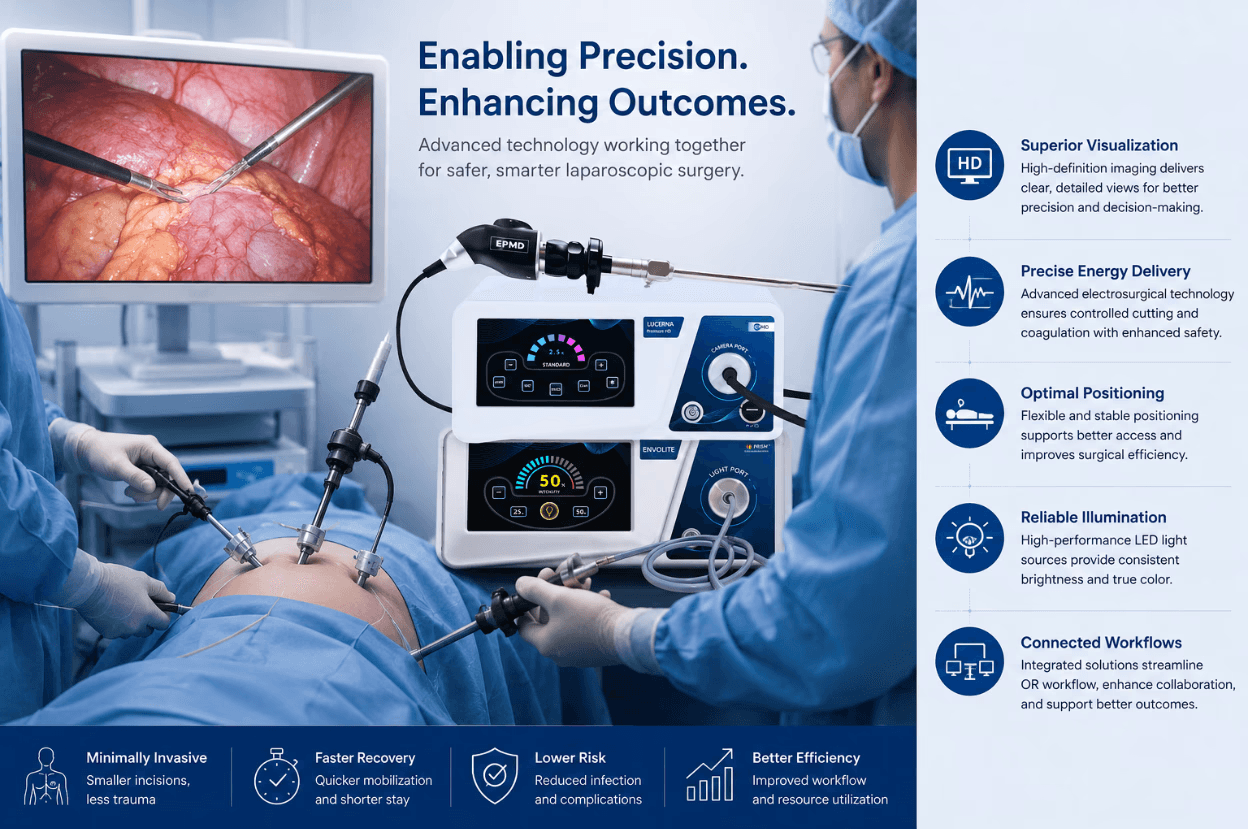
Surgery has changed considerably over the last few decades. What was once defined by large incisions, long hospital stays, and slow recoveries has steadily given way to a minimally invasive approach. Hospitals across specialties are investing in laparoscopic capabilities not as a passing trend, but as a long-term shift in how surgical care is delivered. A dependable endoscopic imaging system sits at the center of that shift, enabling procedures that once seemed ambitious to become routine. While patient recovery is often the most discussed benefit of laparoscopic surgery, the change is equally driven by improvements in visualization, precision, workflow efficiency, and the broader technology supporting the operating room.
Laparoscopic Surgery vs Open Surgery
The differences between the two approaches become clear once placed side by side.
Parameter | Open Surgery | Laparoscopic Surgery |
Incision | Large | Small |
Blood Loss | Higher | Lower |
Recovery Time | Longer | Faster |
Infection Risk | Higher | Lower |
Hospital Stay | Longer | Shorter |
Cosmetic Outcome | Visible scar | Minimal scarring |
Open surgery still has its place. Complex, high-risk, or unusual cases sometimes leave surgeons no choice but to operate through a larger incision, and that's appropriate. But, for a wide range of general surgery, gynecology, urology, bariatric, colorectal, ENT, Endo-spine, and orthopedic procedures, laparoscopy has become the preferred approach rather than some rare exception.
Why Hospitals and Surgeons Prefer Laparoscopic Surgery
Better Surgical Precision
One of the biggest draws of laparoscopic surgery is that surgeons can clearly see what they’re working on. With high-definition visualization, delicate anatomical structures, vessels, nerves, and tissue planes can be identified far more accurately than in an open field. That’s also where the underlying technology matters the most: the quality of the imaging platform directly shapes how confidently a surgeon can operate.
Faster Recovery for Patients
Smaller incisions usually mean less real trauma to the body, which then usually turns into earlier mobilization and a shorter hospital stay. Patients often end up walking, eating, and getting back to their normal rhythm sooner than they would after an open procedure. For hospitals, this helps with bed utilization and smoother day-to-day operations, since patients move through recovery in a relatively predictable sequence.
Reduced Risk of Infection
Smaller wounds typically suggest that less tissue is exposed to the outside environment, so the chance of postoperative infection falls. And because there are fewer complications later, it tends to mean fewer readmissions, which is good for both patients and hospital resources.
Improved Ergonomics for Surgeons
It's easy to focus only on patient outcomes, but endoscopic procedures have changed life for surgeons too, with laparoscopic surgery specifically applying to the abdomen. Better visualization, magnified anatomy, and improved instrument control all add up to less physical strain during long procedures, helping maintain precision from the first incision to the last stitch.
Technology Behind Successful Laparoscopic Surgery
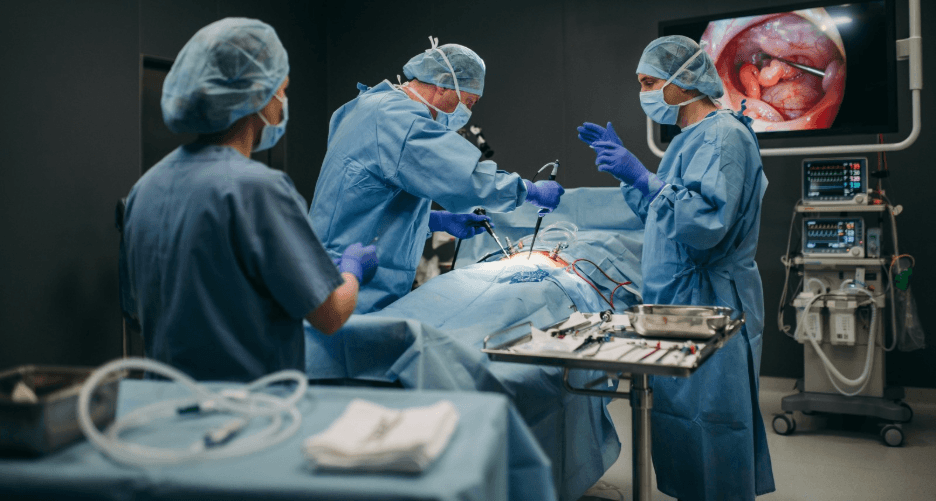
This is where industry conversation really begins, since none of the clinical benefits above are possible without the right equipment working together in the OR.
Imaging and Visualization
Without a high-quality endoscopic imaging system, laparoscopic surgery simply wouldn't be possible. HD and 4K visualization, accurate color reproduction, stable illumination, and consistent image clarity all play a role in how well a surgical team can navigate the body without making a large opening. A reliable laparoscopic camera system is what translates the inside of the body onto the operating room monitor in real time, and its performance can make or break a surgeon's confidence mid-procedure. Camera control and a steady endoscopic light source matter just as much, since even momentary loss of clarity can slow down a case or compromise precision. Rather than relying on any single device, modern setups increasingly combine advanced imaging platforms with intelligent vision processing to support consistent visualization across surgical specialties.
Electrosurgical Generator
Precise tissue cutting and coagulation is essential when doing a laparoscopic procedure. Nowadays, hospitals tend to look for electrosurgical generators that can provide managed energy delivery, along with real-time feedback about how the tissue reacts. At the same time, they want built in safety mechanisms, and steady hemoestasis performance. These features make the procedures safer and improve overall surgical efficiency.
Operation Theatre Table
Patient positioning is far more critical in laparoscopy than people outside the OR often realize. Surgeons often lean on Trendelenburg positioning, reverse Trendelenburg, and lateral tilt to get the right surgical angle. An OT table also must handle smooth electric adjustments and be stable during the whole procedure because even a small shift can affect access and visibility.
OT Lights
It may look like OT lights matter less once the surgical field is viewed on a monitor, but that is not true. Even with a display, good illumination stays essential for port positioning, patient preparation, instrument arrangement, and a steady transition toward open surgery if it ever becomes necessary. Modern LED systems with shadow management and true-color illumination continue to support these requirements, working alongside the primary endoscopic imaging system rather than replacing its role.
OR Integration
Integrated operating rooms have changed how surgical teams work together. Being able to view multiple video sources at once, record procedures for review, share live cases for teaching, and centralize control of imaging and connected devices has made operating rooms noticeably more efficient. Integrated visualization platforms, built around a capable laparoscopic camera system and supporting endoscopic light source, are increasingly adopted in modern operating rooms to streamline workflows and support collaboration.
Choosing the Right Equipment for Laparoscopic Surgery
From a hospital procurement standpoint, selecting equipment isn't just about picking up the most advanced device on the market. It's about fit, reliability, and long-term value. Hospitals should evaluate:
Image quality from the endoscopic imaging system
Performance and durability of the endoscopic light source
Ease of use for surgical staff
Device interoperability
Reliable after-sales service
Future scalability
Regulatory certifications
Clinical support and training
Instead of buying standalone devices one at a time, a lot of healthcare facilities now lean toward integrated operating room ecosystems, where imaging, energy platforms, lighting, tables, and digital workflow solutions are meant to operate together across the equipment lifecycle. In practice, this tends to simplify maintenance, training, and long-term planning in a way that the piecemeal approach rarely can.
Conclusion
Laparoscopic surgery has earned its place as the preferred approach not only because it helps patients recover faster, but because of how far operating room technology has come. Advances in imaging, surgical energy, patient positioning, lighting, and OR integration have made minimally invasive procedures safer, more precise, and more efficient than ever before. As hospitals continue to modernize their surgical infrastructure, investing in an interoperable endoscopic imaging system, alongside a dependable laparoscopic camera system and a consistent light source, can go a long way in building an operating environment that supports both better clinical outcomes and long-term operational efficiency.
At Matrix Medicals, we support this evolution by offering comprehensive solutions across the entire endoscopy and laparoscopy ecosystem. From PHD and 4K endoscopic imaging systems to laparoscopic camera systems, CO₂ insufflators, Cresta electrosurgical generators, endoscopic light sources, and a wide range of endo-lap accessories, our portfolio is designed to help healthcare providers build efficient, future-ready operating rooms that meet the evolving demands of minimally invasive surgery.
Surgery has changed considerably over the last few decades. What was once defined by large incisions, long hospital stays, and slow recoveries has steadily given way to a minimally invasive approach. Hospitals across specialties are investing in laparoscopic capabilities not as a passing trend, but as a long-term shift in how surgical care is delivered. A dependable endoscopic imaging system sits at the center of that shift, enabling procedures that once seemed ambitious to become routine. While patient recovery is often the most discussed benefit of laparoscopic surgery, the change is equally driven by improvements in visualization, precision, workflow efficiency, and the broader technology supporting the operating room.
Laparoscopic Surgery vs Open Surgery
The differences between the two approaches become clear once placed side by side.
Parameter | Open Surgery | Laparoscopic Surgery |
Incision | Large | Small |
Blood Loss | Higher | Lower |
Recovery Time | Longer | Faster |
Infection Risk | Higher | Lower |
Hospital Stay | Longer | Shorter |
Cosmetic Outcome | Visible scar | Minimal scarring |
Open surgery still has its place. Complex, high-risk, or unusual cases sometimes leave surgeons no choice but to operate through a larger incision, and that's appropriate. But, for a wide range of general surgery, gynecology, urology, bariatric, colorectal, ENT, Endo-spine, and orthopedic procedures, laparoscopy has become the preferred approach rather than some rare exception.
Why Hospitals and Surgeons Prefer Laparoscopic Surgery
Better Surgical Precision
One of the biggest draws of laparoscopic surgery is that surgeons can clearly see what they’re working on. With high-definition visualization, delicate anatomical structures, vessels, nerves, and tissue planes can be identified far more accurately than in an open field. That’s also where the underlying technology matters the most: the quality of the imaging platform directly shapes how confidently a surgeon can operate.
Faster Recovery for Patients
Smaller incisions usually mean less real trauma to the body, which then usually turns into earlier mobilization and a shorter hospital stay. Patients often end up walking, eating, and getting back to their normal rhythm sooner than they would after an open procedure. For hospitals, this helps with bed utilization and smoother day-to-day operations, since patients move through recovery in a relatively predictable sequence.
Reduced Risk of Infection
Smaller wounds typically suggest that less tissue is exposed to the outside environment, so the chance of postoperative infection falls. And because there are fewer complications later, it tends to mean fewer readmissions, which is good for both patients and hospital resources.
Improved Ergonomics for Surgeons
It's easy to focus only on patient outcomes, but endoscopic procedures have changed life for surgeons too, with laparoscopic surgery specifically applying to the abdomen. Better visualization, magnified anatomy, and improved instrument control all add up to less physical strain during long procedures, helping maintain precision from the first incision to the last stitch.
Technology Behind Successful Laparoscopic Surgery
This is where industry conversation really begins, since none of the clinical benefits above are possible without the right equipment working together in the OR.
Imaging and Visualization
Without a high-quality endoscopic imaging system, laparoscopic surgery simply wouldn't be possible. HD and 4K visualization, accurate color reproduction, stable illumination, and consistent image clarity all play a role in how well a surgical team can navigate the body without making a large opening. A reliable laparoscopic camera system is what translates the inside of the body onto the operating room monitor in real time, and its performance can make or break a surgeon's confidence mid-procedure. Camera control and a steady endoscopic light source matter just as much, since even momentary loss of clarity can slow down a case or compromise precision. Rather than relying on any single device, modern setups increasingly combine advanced imaging platforms with intelligent vision processing to support consistent visualization across surgical specialties.
Electrosurgical Generator
Precise tissue cutting and coagulation is essential when doing a laparoscopic procedure. Nowadays, hospitals tend to look for electrosurgical generators that can provide managed energy delivery, along with real-time feedback about how the tissue reacts. At the same time, they want built in safety mechanisms, and steady hemoestasis performance. These features make the procedures safer and improve overall surgical efficiency.
Operation Theatre Table
Patient positioning is far more critical in laparoscopy than people outside the OR often realize. Surgeons often lean on Trendelenburg positioning, reverse Trendelenburg, and lateral tilt to get the right surgical angle. An OT table also must handle smooth electric adjustments and be stable during the whole procedure because even a small shift can affect access and visibility.
OT Lights
It may look like OT lights matter less once the surgical field is viewed on a monitor, but that is not true. Even with a display, good illumination stays essential for port positioning, patient preparation, instrument arrangement, and a steady transition toward open surgery if it ever becomes necessary. Modern LED systems with shadow management and true-color illumination continue to support these requirements, working alongside the primary endoscopic imaging system rather than replacing its role.
OR Integration
Integrated operating rooms have changed how surgical teams work together. Being able to view multiple video sources at once, record procedures for review, share live cases for teaching, and centralize control of imaging and connected devices has made operating rooms noticeably more efficient. Integrated visualization platforms, built around a capable laparoscopic camera system and supporting endoscopic light source, are increasingly adopted in modern operating rooms to streamline workflows and support collaboration.
Choosing the Right Equipment for Laparoscopic Surgery
From a hospital procurement standpoint, selecting equipment isn't just about picking up the most advanced device on the market. It's about fit, reliability, and long-term value. Hospitals should evaluate:
Image quality from the endoscopic imaging system
Performance and durability of the endoscopic light source
Ease of use for surgical staff
Device interoperability
Reliable after-sales service
Future scalability
Regulatory certifications
Clinical support and training
Instead of buying standalone devices one at a time, a lot of healthcare facilities now lean toward integrated operating room ecosystems, where imaging, energy platforms, lighting, tables, and digital workflow solutions are meant to operate together across the equipment lifecycle. In practice, this tends to simplify maintenance, training, and long-term planning in a way that the piecemeal approach rarely can.
Conclusion
Laparoscopic surgery has earned its place as the preferred approach not only because it helps patients recover faster, but because of how far operating room technology has come. Advances in imaging, surgical energy, patient positioning, lighting, and OR integration have made minimally invasive procedures safer, more precise, and more efficient than ever before. As hospitals continue to modernize their surgical infrastructure, investing in an interoperable endoscopic imaging system, alongside a dependable laparoscopic camera system and a consistent light source, can go a long way in building an operating environment that supports both better clinical outcomes and long-term operational efficiency.
At Matrix Medicals, we support this evolution by offering comprehensive solutions across the entire endoscopy and laparoscopy ecosystem. From PHD and 4K endoscopic imaging systems to laparoscopic camera systems, CO₂ insufflators, Cresta electrosurgical generators, endoscopic light sources, and a wide range of endo-lap accessories, our portfolio is designed to help healthcare providers build efficient, future-ready operating rooms that meet the evolving demands of minimally invasive surgery.
Share:
Share
RELATED ARTICLES
Read more from our blogs
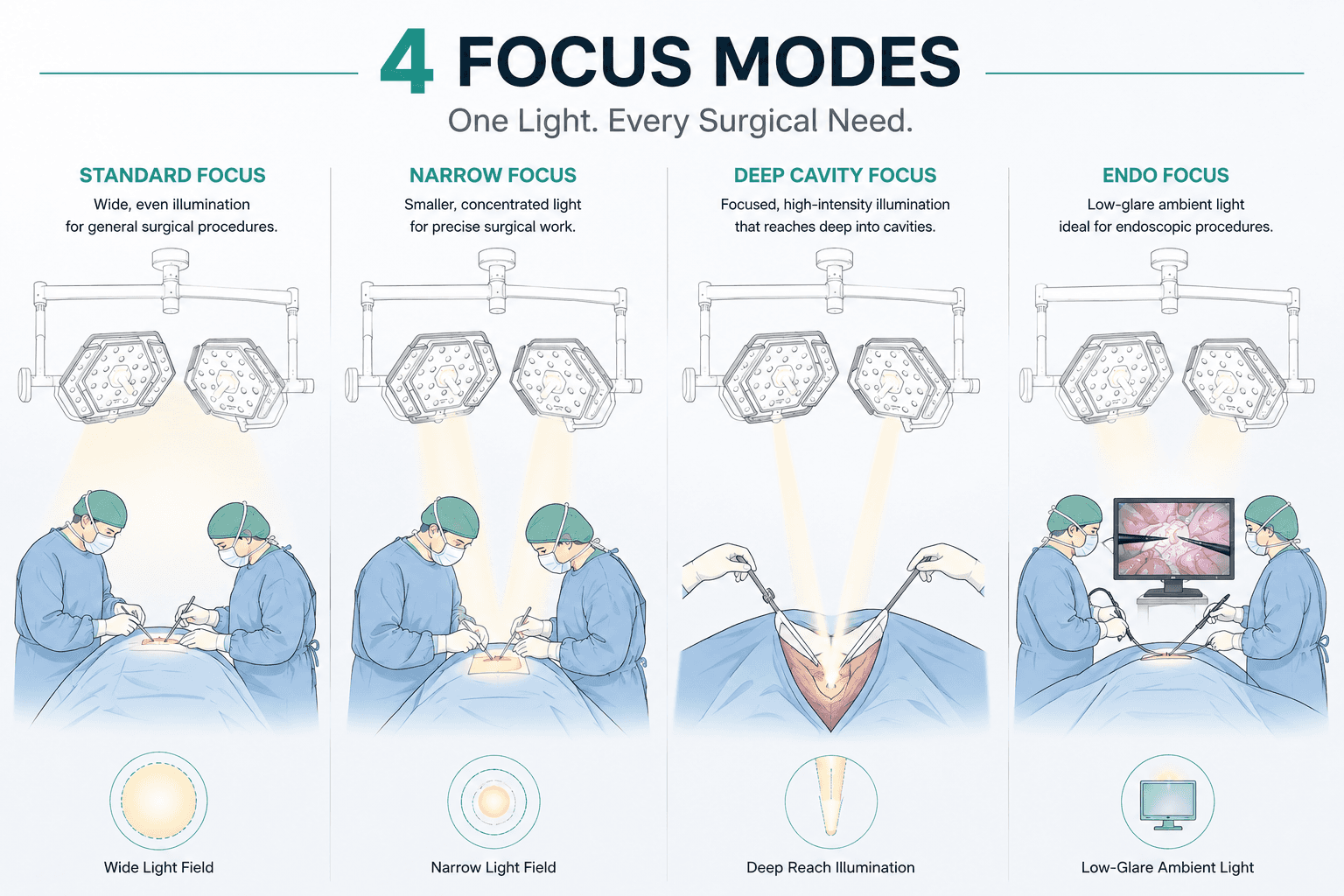
What Are the Different Focus Modes in Modern Surgical Theatre Lights?
What Are the Different Focus Modes in Modern Surgical Theatre Lights?

How Advanced MedTech Solutions Are Improving Surgical Precision and Efficiency
How Advanced MedTech Solutions Are Improving Surgical Precision and Efficiency

How Hospitals Should Evaluate Medical Equipment Before Procurement
How Hospitals Should Evaluate Medical Equipment Before Procurement

C-Arm Compatible OT Tables: What Hospitals Should Check Before Buying
C-Arm Compatible OT Tables: What Hospitals Should Check Before Buying

Products
Get in touch


info@matrixmedicals.in

+91 7304411451
+91 9821235552
Copyright © 2026 Matrix Medicals Pvt. Ltd., All rights reserved.
Products
Get in touch
info@matrixmedicals.in
+91 7304411451
+91 9821235552
Copyright © 2026 Matrix Medicals Pvt. Ltd., All rights reserved.
Contact Us
Contact Us
Contact Us