Why Certified Surgical Technologies Are Essential for Modern Healthcare
Why Certified Surgical Technologies Are Essential for Modern Healthcare

Share:
Share
Equipment reliability has become one of the most pressing concerns for hospitals running modern operating rooms. A single malfunction mid-procedure, a generator failing, an imaging feed dropping, a crucial device underperforming at the wrong moment, can compromise both surgical efficiency and patient safety. This growing awareness has reshaped how hospitals think about buying operation theatre equipments. Back then, specifications and pricing carried most of the weight, but today hospitals give equal, or greater emphasis on the manufacturing standards and the regulatory processes that sit behind a product. This is where certifications come in. They work as an independent third-party check that a device has been designed, produced, and tested according to recognized international standards, instead of requiring hospitals to rely on what a manufacturer says.
As a result, certified operation theatre equipments have moved from being a preference to a baseline expectation among serious buyers. This article examines why certifications carry such significance, what they represent in practice, and how they help hospitals identify manufacturers they can depend on.
Why Certifications Matter Beyond Regulatory Compliance
Ask most buyers what a certification is for, and you'll usually hear some version of "it's a legal box to check." That's not wrong, but it misses most of the picture. Within the industry, a certification is really telling you:
The manufacturing process is repeatable, not a one-off
Product safety has been verified, not assumed
Risks are managed systematically, not patched after the fact
Every component can be traced back through the supply chain
Quality gets revisited and improved continuously
Someone is accountable at every stage of the product's life
For teams sourcing operation theatre equipments, this changes the buying conversation. Rather than sitting through another polished demo and hoping the claims hold up, they can hold a supplier up against standards that are recognized around the world. It takes a lot of guesswork out of a decision that really shouldn't involve guesswork.
How Certified Surgical Technologies Improve Patient Safety
This isn't just an administrative concern; it shows direct outcomes.
Reliable Performance. Equipment that's been through proper certification tends to hold up when things get intense in the OR, which is exactly when you need it to.
Reduced Equipment Failure. Before anything reaches a hospital, quality management systems put it through rigorous testing, which keeps failure rates down once the equipment is in use.
Infection Prevention. Manufacturing controls make sure hygiene, and sterilization requirements are met wherever they apply.
Risk Management. Good manufacturers catch problems while a product is still on the drawing board, not after it's already sitting in an operating room somewhere.
You see this play out most clearly with the equipment surgeons touch or rely on constantly, an operation theatre light, OT tables, electrosurgical generators, laparoscopic imaging systems. When that equipment is dependable, surgeons get to think about the patient in front of them instead of second-guessing the machine beside them.
Key Certifications Every Hospital Should Look For
If you're vetting a supplier of operation theatre equipments, here are the certifications worth checking first.
ISO 13485:2016
This is the quality management standard built specifically for medical devices, not a generic one adapted for the purpose. It touches nearly everything: design, manufacturing, installation, servicing, documentation, supplier management, traceability, and how corrective actions get handled. Most people in the industry would call it the single most important certification a device manufacturer can hold.
CE Certification
CE marking shows a product meets European health, safety, and performance requirements, standards that are demanding by design. It's often treated as shorthand for global quality, even outside Europe.
ISO 9001:2015
This one is broader, covering customer satisfaction, process consistency, continual improvement, and quality management generally. It applies across industries, but for a medical device manufacturer, it's still a meaningful marker of discipline.
CDSCO Registration
India's own regulatory authority for medical devices. Registration here means a product has cleared Indian requirements before it's allowed into hospitals.
FDA Compliance (Where Applicable)
Meeting US FDA requirements is a strong signal on its own, since American regulatory standards for medical devices are among the strictest anywhere.
Why Certifications Matter During Hospital Procurement
Procurement teams don't just look at what a device does. They're weighing suppliers of operation theatre equipments against a longer list:
Regulatory compliance
Lifecycle support
Documentation quality
Service capability
Product reliability
Whether this looks like a partnership worth building
Suppliers who hold solid certifications tend to make this easier in practical ways, cleaner documentation, audits that don't drag on, better traceability, after-sales support that shows up, and fewer surprises down the road. Certifications don't eliminate procurement risk entirely, but they give teams something concrete to lean on besides a sales pitch.

How Matrix Medicals Builds Trust Through Certified Quality
Matrix Medicals doesn't just say it prioritises quality; its certifications back up. The company holds ISO 13485:2016, CE, ISO 9001:2015, ICMED 13485, CDSCO, and FDA credentials, which is a comprehensive spread for a manufacturer in this space.
For a hospital buying from Matrix, that translates into quality systems benchmarked against global standards, manufacturing that doesn't vary batch to batch, operation theatre equipments you can actually rely on, less friction around regulatory approval, and support that's still there long after installation.
It also goes beyond individual products. Matrix Medicals builds toward a complete OT ecosystem, backed by service coverage across India and a genuine focus on best OR integration, so hospitals end up with an operating room where every piece works with the others, rather than a collection of devices bought separately and stitched together after the fact.
Conclusion
Trust in healthcare doesn't come from taking someone's word for it; it must be earned and checked. Certified operation theatre equipments give hospitals something real to stand on: proof that the technology in their operating rooms was designed, built, and maintained to standards that mean something internationally. For hospitals, that translates into lower procurement risk, safer procedures, and equipment that keeps performing years down the line. As surgical technology keeps advancing, choosing manufacturers who take these standards seriously isn't just due diligence. It's an investment in better outcomes for patients and clinicians alike.
Equipment reliability has become one of the most pressing concerns for hospitals running modern operating rooms. A single malfunction mid-procedure, a generator failing, an imaging feed dropping, a crucial device underperforming at the wrong moment, can compromise both surgical efficiency and patient safety. This growing awareness has reshaped how hospitals think about buying operation theatre equipments. Back then, specifications and pricing carried most of the weight, but today hospitals give equal, or greater emphasis on the manufacturing standards and the regulatory processes that sit behind a product. This is where certifications come in. They work as an independent third-party check that a device has been designed, produced, and tested according to recognized international standards, instead of requiring hospitals to rely on what a manufacturer says.
As a result, certified operation theatre equipments have moved from being a preference to a baseline expectation among serious buyers. This article examines why certifications carry such significance, what they represent in practice, and how they help hospitals identify manufacturers they can depend on.
Why Certifications Matter Beyond Regulatory Compliance
Ask most buyers what a certification is for, and you'll usually hear some version of "it's a legal box to check." That's not wrong, but it misses most of the picture. Within the industry, a certification is really telling you:
The manufacturing process is repeatable, not a one-off
Product safety has been verified, not assumed
Risks are managed systematically, not patched after the fact
Every component can be traced back through the supply chain
Quality gets revisited and improved continuously
Someone is accountable at every stage of the product's life
For teams sourcing operation theatre equipments, this changes the buying conversation. Rather than sitting through another polished demo and hoping the claims hold up, they can hold a supplier up against standards that are recognized around the world. It takes a lot of guesswork out of a decision that really shouldn't involve guesswork.
How Certified Surgical Technologies Improve Patient Safety
This isn't just an administrative concern; it shows direct outcomes.
Reliable Performance. Equipment that's been through proper certification tends to hold up when things get intense in the OR, which is exactly when you need it to.
Reduced Equipment Failure. Before anything reaches a hospital, quality management systems put it through rigorous testing, which keeps failure rates down once the equipment is in use.
Infection Prevention. Manufacturing controls make sure hygiene, and sterilization requirements are met wherever they apply.
Risk Management. Good manufacturers catch problems while a product is still on the drawing board, not after it's already sitting in an operating room somewhere.
You see this play out most clearly with the equipment surgeons touch or rely on constantly, an operation theatre light, OT tables, electrosurgical generators, laparoscopic imaging systems. When that equipment is dependable, surgeons get to think about the patient in front of them instead of second-guessing the machine beside them.
Key Certifications Every Hospital Should Look For
If you're vetting a supplier of operation theatre equipments, here are the certifications worth checking first.
ISO 13485:2016
This is the quality management standard built specifically for medical devices, not a generic one adapted for the purpose. It touches nearly everything: design, manufacturing, installation, servicing, documentation, supplier management, traceability, and how corrective actions get handled. Most people in the industry would call it the single most important certification a device manufacturer can hold.
CE Certification
CE marking shows a product meets European health, safety, and performance requirements, standards that are demanding by design. It's often treated as shorthand for global quality, even outside Europe.
ISO 9001:2015
This one is broader, covering customer satisfaction, process consistency, continual improvement, and quality management generally. It applies across industries, but for a medical device manufacturer, it's still a meaningful marker of discipline.
CDSCO Registration
India's own regulatory authority for medical devices. Registration here means a product has cleared Indian requirements before it's allowed into hospitals.
FDA Compliance (Where Applicable)
Meeting US FDA requirements is a strong signal on its own, since American regulatory standards for medical devices are among the strictest anywhere.
Why Certifications Matter During Hospital Procurement
Procurement teams don't just look at what a device does. They're weighing suppliers of operation theatre equipments against a longer list:
Regulatory compliance
Lifecycle support
Documentation quality
Service capability
Product reliability
Whether this looks like a partnership worth building
Suppliers who hold solid certifications tend to make this easier in practical ways, cleaner documentation, audits that don't drag on, better traceability, after-sales support that shows up, and fewer surprises down the road. Certifications don't eliminate procurement risk entirely, but they give teams something concrete to lean on besides a sales pitch.
How Matrix Medicals Builds Trust Through Certified Quality
Matrix Medicals doesn't just say it prioritises quality; its certifications back up. The company holds ISO 13485:2016, CE, ISO 9001:2015, ICMED 13485, CDSCO, and FDA credentials, which is a comprehensive spread for a manufacturer in this space.
For a hospital buying from Matrix, that translates into quality systems benchmarked against global standards, manufacturing that doesn't vary batch to batch, operation theatre equipments you can actually rely on, less friction around regulatory approval, and support that's still there long after installation.
It also goes beyond individual products. Matrix Medicals builds toward a complete OT ecosystem, backed by service coverage across India and a genuine focus on best OR integration, so hospitals end up with an operating room where every piece works with the others, rather than a collection of devices bought separately and stitched together after the fact.
Conclusion
Trust in healthcare doesn't come from taking someone's word for it; it must be earned and checked. Certified operation theatre equipments give hospitals something real to stand on: proof that the technology in their operating rooms was designed, built, and maintained to standards that mean something internationally. For hospitals, that translates into lower procurement risk, safer procedures, and equipment that keeps performing years down the line. As surgical technology keeps advancing, choosing manufacturers who take these standards seriously isn't just due diligence. It's an investment in better outcomes for patients and clinicians alike.
Share:
Share
RELATED ARTICLES
Read more from our blogs
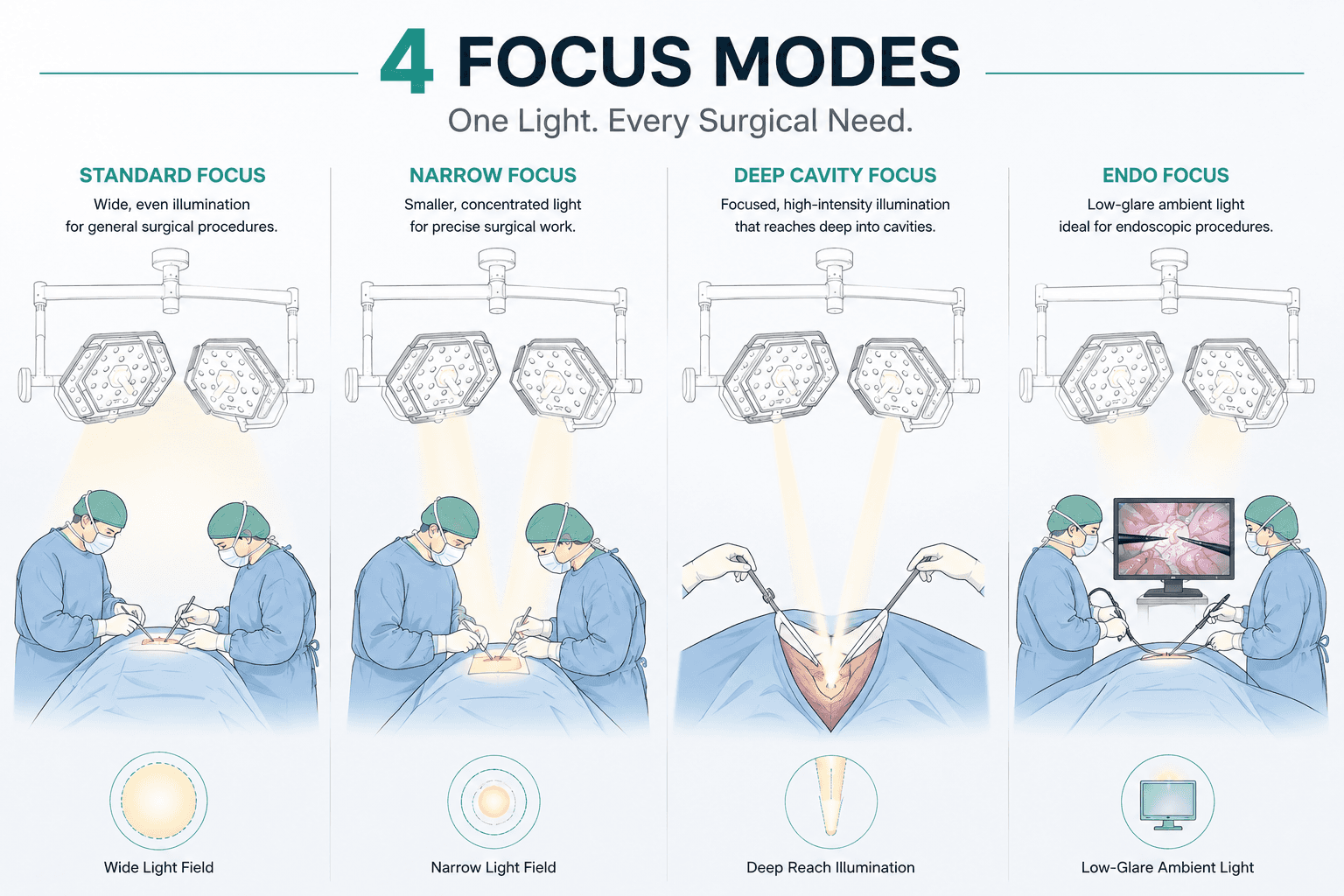
What Are the Different Focus Modes in Modern Surgical Theatre Lights?
What Are the Different Focus Modes in Modern Surgical Theatre Lights?

How Advanced MedTech Solutions Are Improving Surgical Precision and Efficiency
How Advanced MedTech Solutions Are Improving Surgical Precision and Efficiency

How Hospitals Should Evaluate Medical Equipment Before Procurement
How Hospitals Should Evaluate Medical Equipment Before Procurement

C-Arm Compatible OT Tables: What Hospitals Should Check Before Buying
C-Arm Compatible OT Tables: What Hospitals Should Check Before Buying
Products
Get in touch


info@matrixmedicals.in

+91 7304411451
+91 9821235552
Copyright © 2026 Matrix Medicals Pvt. Ltd., All rights reserved.
Products
Get in touch
info@matrixmedicals.in
+91 7304411451
+91 9821235552
Copyright © 2026 Matrix Medicals Pvt. Ltd., All rights reserved.
Contact Us
Contact Us
Contact Us