How Operation Theatre Equipment Improves Surgical Workflow
How Operation Theatre Equipment Improves Surgical Workflow

Share:
Share
No surgery succeeds on the surgeon's skill alone. Behind every procedure is a surgical workflow, the coordinated interplay of people, processes, and operation theatre equipment that determines how safely and efficiently a patient moves from admission through recovery.
Surgical workflow is the structured sequence of tasks and decisions carried out before, during, and after an operation. When that sequence runs smoothly, patient safety improves, and hospital productivity climbs with it. When it falters, even the smallest inefficiencies can translate into delays, added risk, and strain on hospital resources. As operating rooms get more sophisticated, technology increasingly holds these stages together. The World Health Organization’s Safe Surgery initiative makes the same argument, pointing out that coordinated systems and standardized processes are central to reducing surgical harm and improving outcomes globally.
Understanding Surgical Workflow
A surgical procedure moves through a defined set of stages: pre-operative preparation, patient positioning, the procedure itself, intra-operative monitoring, and post-operative turnover. Each of these stages leans on dependable operation theatre equipment, from the devices used to position a patient to the systems that monitor them throughout the case.
An industrial perspective. Hospitals are increasingly borrowing a manufacturing mindset, tracking surgical workflow through key performance indicators like turnover time, procedure duration, equipment availability, OR utilization, and staff movement. Seen through this lens, an operating room functions less like a single clinical space and more like an operational system. Planning equipment as an integrated whole, rather than isolated purchases, helps close the gaps that these KPIs are designed to surface.
Why Operation Theatre Equipment Plays a Critical Role
Operation theatre equipment does more than furnish a room; it shapes visibility, accessibility, communication among the surgical team, ergonomics, and, ultimately, patient safety. The right equipment doesn't just perform better on a spec sheet; it actively supports the clinical decision-making that unfolds moment by moment inside the OR.
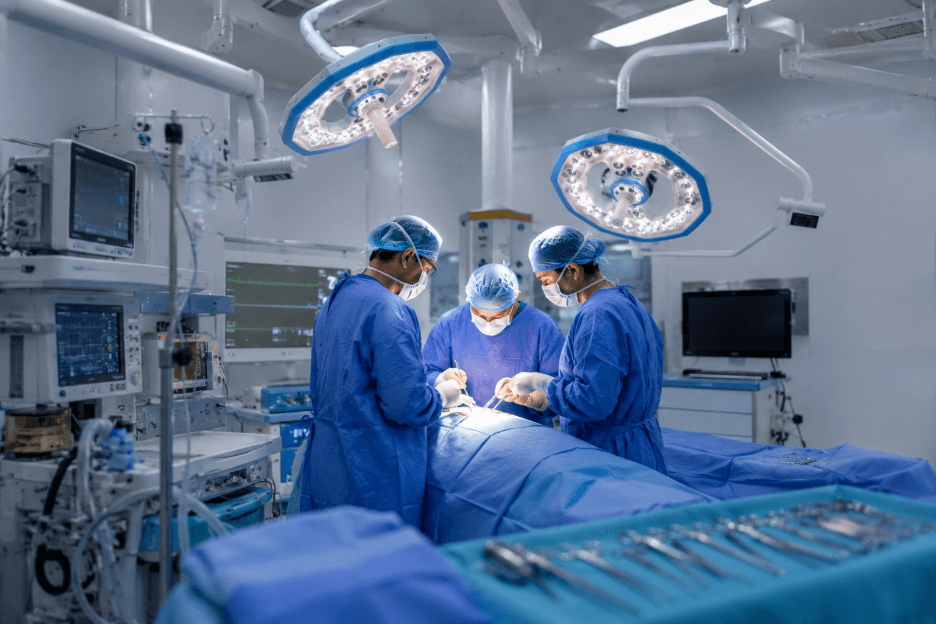
A few examples make this concrete. Shadow-free illumination from a well-designed operation theatre light sharpens a surgeon's ability to visualize tissue during delicate steps. An ergonomically built operation theatre table reduces how often a patient needs repositioning, saving time and less strain on both patient and staff. Ceiling-mounted pendants keep cables and hoses organized overhead instead of underfoot. High-definition visualization systems give minimally invasive procedures the clarity they demand. Taken together, lights, tables, pendants, and imaging systems, these form the working backbone of a modern OT, understood here as functional categories rather than specific brands.
Five Ways Modern OT Equipment Improves Surgical Workflow
1. Better Surgical Visibility
Steady, high-quality illumination supports accurate tissue visualization from start to finish, cutting down on eye fatigue for the surgical crew and avoiding the interruptions that come with mid-procedure lighting adjustments. An operating theatre light built around LED technology, a high color rendering index (CRI), and careful shadow management keeps the surgical field consistent from the very first incision to closure.
2. Improved Ergonomics
A well-designed operation theatre table, with properly placed ceiling pendants and a sensible plan for equipment placement, helps reduce the physical toll on surgeons during long procedures. The payoff is more than comfort; less fatigue often leads to steadier, more controlled movement, and better view to the surgical site helps keep things consistent across a full slate of cases.
3. Efficient Equipment Organization
Clutter has a way of slowing everything down. Well-planned integration of operation theatre equipment, organized cabling, accessible gas outlets, conveniently placed power points, keeps a room functioning even under pressure. Surgical pendants and integrated OT layouts pull these connections overhead or within easy reach, freeing staff to focus on the patient rather than navigating equipment.
4. Enhanced Imaging and Data Access
HD and 4K imaging, along with endoscopic visualization and integrated display systems, help bring critical information faster in front of the surgical team. Operation room integration, linking imaging, monitoring, and documentation into one single workflow, speeds up clinical decision making at moments where speed matters most.
5. Reduced Downtime
Preventive maintenance, dependable operation theatre equipment, and standardized interfaces all lower the chances of an unplanned failure in the middle of a case. From an industrial standpoint, random equipment breakdowns cost hospitals real productivity, through delayed cases, canceled surgeries or emergency repairs. Equipment made for durability and easy servicing helps keep surgical schedules intact.
Workflow Benefits for Hospitals
The gains from a well-integrated operating theatre reach well past the patient on the table. Hospitals that invest in reliable, ergonomic operation theatre equipment typically see measurable operational returns:
✔ Faster turnover times
✔ Higher OR utilization
✔ Reduced procedure delays
✔ Better staff coordination
✔ Lower maintenance disruptions
✔ Improved resource utilization
From an industrial standpoint, this explains why modern hospitals are investing more in integrated operating theatres: workflow efficiency has a direct, measurable bearing on operational costs, not just clinical outcomes.
Factors Hospitals Should Consider When Selecting OT Equipment
Selecting operation theatre equipment is less about chasing the most advanced individual device and more about judging how well that equipment will function within a connected system. Hospitals typically weigh reliability, compatibility with existing infrastructure, ease of maintenance, scalability, ergonomics for staff, quality of service support, and regulatory compliance.
These criteria apply across every category, the operation theatre light, the operation theatre table, pendants, imaging systems, and electrosurgical units alike. In practice, equipment chosen to work together as a system tends to improve workflow more meaningfully than devices selected independently and connected as an afterthought.
Conclusion
Modern operation theatre equipment isn't just a collection of individual devices; it functions as an interconnected system supporting efficient surgical workflows from the first pre-operative check to the final post-operative turnover. Hospitals that invest in reliable, ergonomic, and well-integrated equipment, aim at better staff efficiency, fewer delays, strengthen patient safety, and get more with each operating room. Since operating room technology keeps evolving, it will keep changing how surgical care is provided and also how smoothly hospitals can run.
No surgery succeeds on the surgeon's skill alone. Behind every procedure is a surgical workflow, the coordinated interplay of people, processes, and operation theatre equipment that determines how safely and efficiently a patient moves from admission through recovery.
Surgical workflow is the structured sequence of tasks and decisions carried out before, during, and after an operation. When that sequence runs smoothly, patient safety improves, and hospital productivity climbs with it. When it falters, even the smallest inefficiencies can translate into delays, added risk, and strain on hospital resources. As operating rooms get more sophisticated, technology increasingly holds these stages together. The World Health Organization’s Safe Surgery initiative makes the same argument, pointing out that coordinated systems and standardized processes are central to reducing surgical harm and improving outcomes globally.
Understanding Surgical Workflow
A surgical procedure moves through a defined set of stages: pre-operative preparation, patient positioning, the procedure itself, intra-operative monitoring, and post-operative turnover. Each of these stages leans on dependable operation theatre equipment, from the devices used to position a patient to the systems that monitor them throughout the case.
An industrial perspective. Hospitals are increasingly borrowing a manufacturing mindset, tracking surgical workflow through key performance indicators like turnover time, procedure duration, equipment availability, OR utilization, and staff movement. Seen through this lens, an operating room functions less like a single clinical space and more like an operational system. Planning equipment as an integrated whole, rather than isolated purchases, helps close the gaps that these KPIs are designed to surface.
Why Operation Theatre Equipment Plays a Critical Role
Operation theatre equipment does more than furnish a room; it shapes visibility, accessibility, communication among the surgical team, ergonomics, and, ultimately, patient safety. The right equipment doesn't just perform better on a spec sheet; it actively supports the clinical decision-making that unfolds moment by moment inside the OR.
A few examples make this concrete. Shadow-free illumination from a well-designed operation theatre light sharpens a surgeon's ability to visualize tissue during delicate steps. An ergonomically built operation theatre table reduces how often a patient needs repositioning, saving time and less strain on both patient and staff. Ceiling-mounted pendants keep cables and hoses organized overhead instead of underfoot. High-definition visualization systems give minimally invasive procedures the clarity they demand. Taken together, lights, tables, pendants, and imaging systems, these form the working backbone of a modern OT, understood here as functional categories rather than specific brands.
Five Ways Modern OT Equipment Improves Surgical Workflow
1. Better Surgical Visibility
Steady, high-quality illumination supports accurate tissue visualization from start to finish, cutting down on eye fatigue for the surgical crew and avoiding the interruptions that come with mid-procedure lighting adjustments. An operating theatre light built around LED technology, a high color rendering index (CRI), and careful shadow management keeps the surgical field consistent from the very first incision to closure.
2. Improved Ergonomics
A well-designed operation theatre table, with properly placed ceiling pendants and a sensible plan for equipment placement, helps reduce the physical toll on surgeons during long procedures. The payoff is more than comfort; less fatigue often leads to steadier, more controlled movement, and better view to the surgical site helps keep things consistent across a full slate of cases.
3. Efficient Equipment Organization
Clutter has a way of slowing everything down. Well-planned integration of operation theatre equipment, organized cabling, accessible gas outlets, conveniently placed power points, keeps a room functioning even under pressure. Surgical pendants and integrated OT layouts pull these connections overhead or within easy reach, freeing staff to focus on the patient rather than navigating equipment.
4. Enhanced Imaging and Data Access
HD and 4K imaging, along with endoscopic visualization and integrated display systems, help bring critical information faster in front of the surgical team. Operation room integration, linking imaging, monitoring, and documentation into one single workflow, speeds up clinical decision making at moments where speed matters most.
5. Reduced Downtime
Preventive maintenance, dependable operation theatre equipment, and standardized interfaces all lower the chances of an unplanned failure in the middle of a case. From an industrial standpoint, random equipment breakdowns cost hospitals real productivity, through delayed cases, canceled surgeries or emergency repairs. Equipment made for durability and easy servicing helps keep surgical schedules intact.
Workflow Benefits for Hospitals
The gains from a well-integrated operating theatre reach well past the patient on the table. Hospitals that invest in reliable, ergonomic operation theatre equipment typically see measurable operational returns:
✔ Faster turnover times
✔ Higher OR utilization
✔ Reduced procedure delays
✔ Better staff coordination
✔ Lower maintenance disruptions
✔ Improved resource utilization
From an industrial standpoint, this explains why modern hospitals are investing more in integrated operating theatres: workflow efficiency has a direct, measurable bearing on operational costs, not just clinical outcomes.
Factors Hospitals Should Consider When Selecting OT Equipment
Selecting operation theatre equipment is less about chasing the most advanced individual device and more about judging how well that equipment will function within a connected system. Hospitals typically weigh reliability, compatibility with existing infrastructure, ease of maintenance, scalability, ergonomics for staff, quality of service support, and regulatory compliance.
These criteria apply across every category, the operation theatre light, the operation theatre table, pendants, imaging systems, and electrosurgical units alike. In practice, equipment chosen to work together as a system tends to improve workflow more meaningfully than devices selected independently and connected as an afterthought.
Conclusion
Modern operation theatre equipment isn't just a collection of individual devices; it functions as an interconnected system supporting efficient surgical workflows from the first pre-operative check to the final post-operative turnover. Hospitals that invest in reliable, ergonomic, and well-integrated equipment, aim at better staff efficiency, fewer delays, strengthen patient safety, and get more with each operating room. Since operating room technology keeps evolving, it will keep changing how surgical care is provided and also how smoothly hospitals can run.
Share:
Share
RELATED ARTICLES
Read more from our blogs

Why Is Saline-Compatible Cautery Machine Important in Urological Surgery?
Why Is Saline-Compatible Cautery Machine Important in Urological Surgery?

How Medical Laboratory Technology Is Improving the Speed and Accuracy of Diagnostics
How Medical Laboratory Technology Is Improving the Speed and Accuracy of Diagnostics
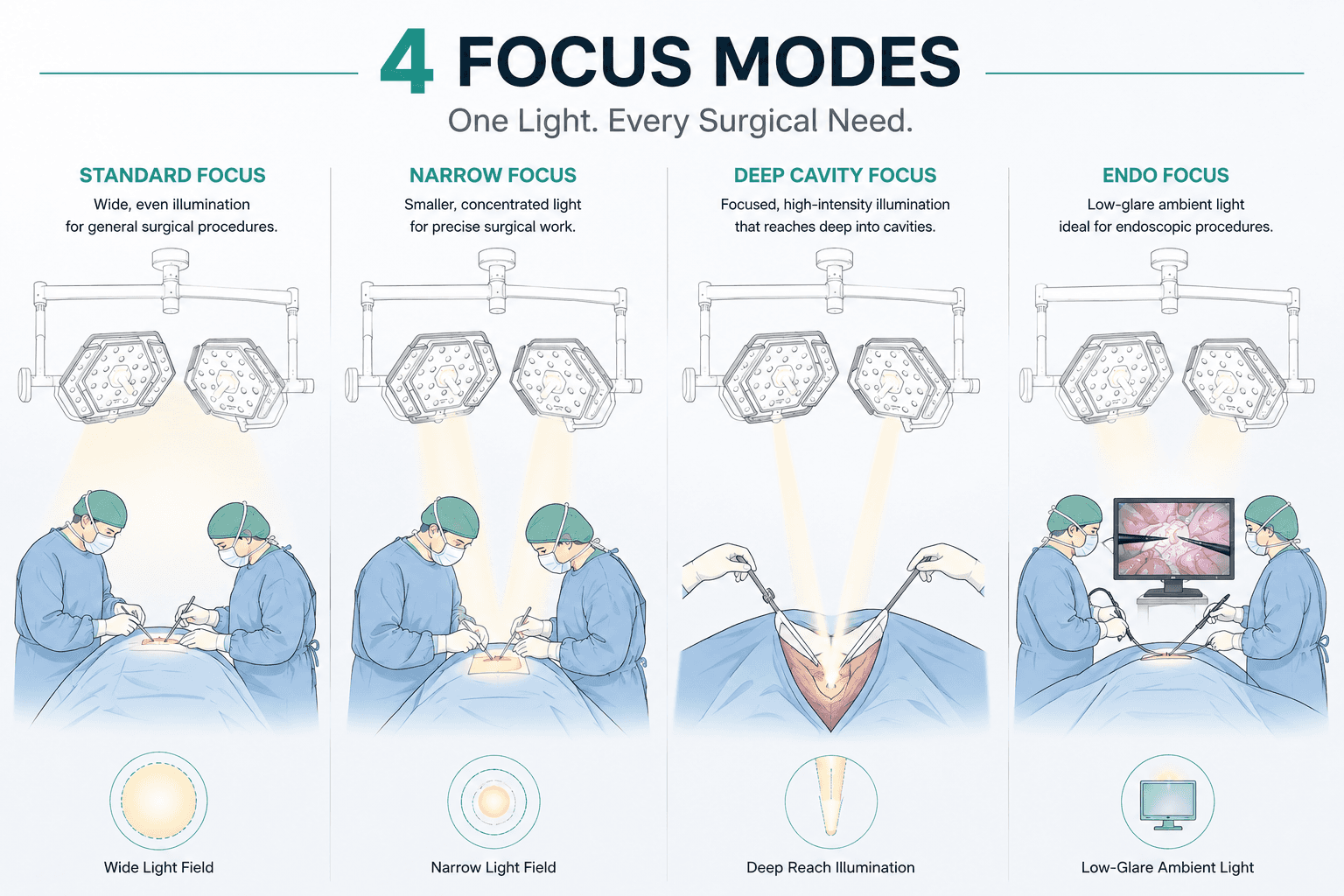
What Are the Different Focus Modes in Modern Surgical Theatre Lights?
What Are the Different Focus Modes in Modern Surgical Theatre Lights?

How Advanced MedTech Solutions Are Improving Surgical Precision and Efficiency
How Advanced MedTech Solutions Are Improving Surgical Precision and Efficiency

Products
Get in touch


info@matrixmedicals.in

+91 7304411451
+91 9821235552
Copyright © 2026 Matrix Medicals Pvt. Ltd., All rights reserved.
Products
Get in touch
info@matrixmedicals.in
+91 7304411451
+91 9821235552
Copyright © 2026 Matrix Medicals Pvt. Ltd., All rights reserved.
Contact Us
Contact Us
Contact Us