How Modern Electrosurgical Generator Systems Are Evolving for Better Surgical Workflow
How Modern Electrosurgical Generator Systems Are Evolving for Better Surgical Workflow

Share:
Share
Modern surgery demands precision, speed, and an uninterrupted focus. While an electrosurgical generator has been traditionally assessed on its cutting and coagulation abilities, today’s operating rooms are putting the same weight on workflow efficiency and surgeon ergonomics.
As minimally invasive procedures keep getting more complex, even tiny pauses like briefly looking away from the operative area to adjust the energy settings, can throw off the procedural rhythm. So that is why modern electrosurgical generator systems are moving beyond delivering energy, and are being built to help with a smoother, more intuitive way of working in the room.
Why Surgical Workflow Has Become a Design Priority
Today's operating room is one of the most technologically intensive environments in healthcare. Surgeons work alongside imaging systems, laparoscopic towers, patient monitoring devices, and energy platforms, all while making complex decisions in real time.
Research in human factors and surgical ergonomics increasingly shows that workflow disruptions and unnecessary interruptions can increase cognitive workload and affect team efficiency. In procedures that demand long focus, and a high level of precision, even tiny distractions matter.
This is especially true in minimally invasive surgery, where surgeons lean a lot on what they see from a monitor and make intricate movements in very limited anatomical spaces. Any moment where they have to divert their attention away from the operative field can break that steady rhythm of the procedure.
As a result, medical device manufacturers are beginning to view workflow as a critical design parameter rather than an afterthought.
The question is no longer:
"How powerful is the generator?"
It is increasingly becoming: "How seamlessly does the generator fit into the surgical workflow?"
The Hidden Cost of Looking Away
In surgery, continuity of focus is invaluable.
Every time a surgeon needs to look away from the operative field to change an energy setting, there is a small but measurable interruption in concentration. The surgeon's visual attention shifts from the patient to the device interface, and then back again.
Individually, these moments may seem insignificant. Collectively, however, they can contribute to:
Increased cognitive burden
Disruption of procedural flow
Additional communication between the surgeon and assisting staff
Reduced efficiency during technically demanding procedures
The issue is not that changing a mode is difficult. The issue is that the interaction itself can interrupt focus.
This challenge is not unique to electrosurgery. In healthcare technology, there is a growing push to cut down on attention shifts, so clinicians can keep their focus on the patient.
We see this trend in robotic surgery, integrated operating rooms, and advanced visualization systems. Lately, surgical technologies are being designed to work around the surgeon, not the other way around.
Electrosurgical Generators Are Evolving Beyond Power Specifications
Traditionally, electrosurgical generator systems were differentiated by:
Power output
Tissue effects
Cutting and coagulation performance
Specialty applications
While these remain important, hospitals and clinicians are beginning to consider additional factors when evaluating new systems.
These include:
Ease of Use
Can surgeons access required functions quickly and intuitively?
Workflow Integration
Does the device support the natural flow of a procedure?
Interface Simplicity
Can settings be adjusted without unnecessary steps?
Ergonomic Design
Does the technology reduce physical and cognitive strain?
The next generation of electrosurgical generator machines is increasingly being designed with these questions in mind.
The most effective technology is often the technology that demands the least attention.
The Rise of Workflow-Centric Energy Control
One of the most significant trends in electrosurgery today is the move toward workflow-centric design.
Rather than requiring surgeons to adapt to the equipment, newer systems are being developed to adapt to surgical workflows.
Several design principles are emerging:
Hands-Free Operation
Foot-controlled functionality lets surgeons reach energy delivery without having to rely too much on the console.
Faster Access to Multiple Modalities
Procedures often require different energy effects at different stages. Systems that simplify transitions between modalities can help preserve procedural rhythm.
Human-Centered Design
Manufacturers are zeroing in on how surgeons actually engage with the technology during real procedures, instead of only talking about the technical specifications.
Reduced Cognitive Load
With simpler interactions and fewer unnecessary steps, the newer systems want to reduce distractions and help keep steady concentration going.
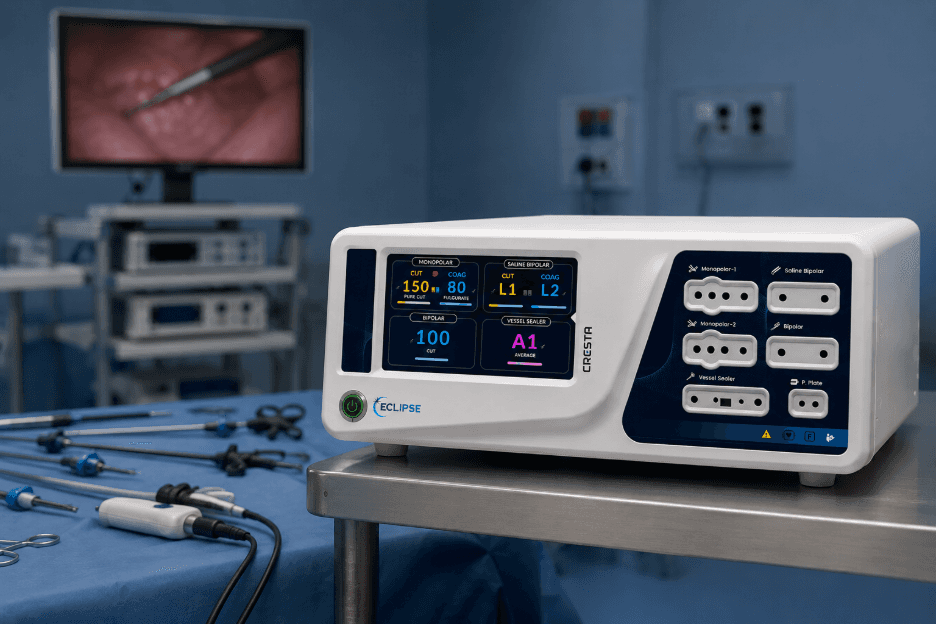
Interestingly, some of the newest electrosurgical generator systems are incorporating multi-function foot interfaces and direct access to multiple energy modalities. The objective is straightforward: enable surgeons to maintain focus on the operative field while accessing the functions they need.
What the Industry Can Learn from Workflow-Centric Generator Design
As surgical procedures continue to evolve, the design priorities of electrosurgical systems are evolving as well.
A workflow-centric energy platform should ideally:
Provide immediate access to multiple energy modes.
Reduce dependence on manual console interaction.
Support uninterrupted visual focus.
Minimise unnecessary communication during critical steps.
Allow seamless transitions between modalities.
More manufacturers are looking into control architectures that let surgeons reach multiple functions straight from the footswitch, so the workflow feels smoother during the operation and there is less need to pull focus away from the patient.
This represents a subtle but important shift in thinking.
The focus is moving away from simply delivering energy and toward delivering energy in a way that supports the surgeon's natural workflow.
The Future of Electrosurgical Generator Systems
The next generation of best electrosurgical generator systems will likely be judged not only by their technical specifications but also by how effectively they support the people using them.
Hospitals and clinicians may increasingly ask:
Does the system reduce workflow interruptions?
Does it minimize cognitive burden?
Does it help maintain continuous visual focus?
Does it integrate naturally into minimally invasive procedures?
As surgeries start getting more complex, and operating rooms get more technologically advanced, these questions are going to matter more.
The future of electrosurgery might not be determined just by higher power or added features.
Rather, it could be shaped by technologies that let surgeons stay fully focused on what’s important - the patient and the procedure that’s right in front of them.
Conclusion
Electrosurgical generator systems are going through a big change. They’re not only energy-delivery devices anymore; they are becoming workflow enabling technologies, built around the everyday realities of modern surgery.
The industry's focus is gradually shifting toward ergonomics, human factors, and uninterrupted concentration. Systems that simplify interactions, reduce attention shifts, and support continuous surgical focus are likely to shape the next phase of electrosurgical innovation.
Because in the operating room, the most valuable technology is often the one that quietly enables surgeons to keep their eyes, and their attention, exactly where they need to be.
Modern surgery demands precision, speed, and an uninterrupted focus. While an electrosurgical generator has been traditionally assessed on its cutting and coagulation abilities, today’s operating rooms are putting the same weight on workflow efficiency and surgeon ergonomics.
As minimally invasive procedures keep getting more complex, even tiny pauses like briefly looking away from the operative area to adjust the energy settings, can throw off the procedural rhythm. So that is why modern electrosurgical generator systems are moving beyond delivering energy, and are being built to help with a smoother, more intuitive way of working in the room.
Why Surgical Workflow Has Become a Design Priority
Today's operating room is one of the most technologically intensive environments in healthcare. Surgeons work alongside imaging systems, laparoscopic towers, patient monitoring devices, and energy platforms, all while making complex decisions in real time.
Research in human factors and surgical ergonomics increasingly shows that workflow disruptions and unnecessary interruptions can increase cognitive workload and affect team efficiency. In procedures that demand long focus, and a high level of precision, even tiny distractions matter.
This is especially true in minimally invasive surgery, where surgeons lean a lot on what they see from a monitor and make intricate movements in very limited anatomical spaces. Any moment where they have to divert their attention away from the operative field can break that steady rhythm of the procedure.
As a result, medical device manufacturers are beginning to view workflow as a critical design parameter rather than an afterthought.
The question is no longer:
"How powerful is the generator?"
It is increasingly becoming: "How seamlessly does the generator fit into the surgical workflow?"
The Hidden Cost of Looking Away
In surgery, continuity of focus is invaluable.
Every time a surgeon needs to look away from the operative field to change an energy setting, there is a small but measurable interruption in concentration. The surgeon's visual attention shifts from the patient to the device interface, and then back again.
Individually, these moments may seem insignificant. Collectively, however, they can contribute to:
Increased cognitive burden
Disruption of procedural flow
Additional communication between the surgeon and assisting staff
Reduced efficiency during technically demanding procedures
The issue is not that changing a mode is difficult. The issue is that the interaction itself can interrupt focus.
This challenge is not unique to electrosurgery. In healthcare technology, there is a growing push to cut down on attention shifts, so clinicians can keep their focus on the patient.
We see this trend in robotic surgery, integrated operating rooms, and advanced visualization systems. Lately, surgical technologies are being designed to work around the surgeon, not the other way around.
Electrosurgical Generators Are Evolving Beyond Power Specifications
Traditionally, electrosurgical generator systems were differentiated by:
Power output
Tissue effects
Cutting and coagulation performance
Specialty applications
While these remain important, hospitals and clinicians are beginning to consider additional factors when evaluating new systems.
These include:
Ease of Use
Can surgeons access required functions quickly and intuitively?
Workflow Integration
Does the device support the natural flow of a procedure?
Interface Simplicity
Can settings be adjusted without unnecessary steps?
Ergonomic Design
Does the technology reduce physical and cognitive strain?
The next generation of electrosurgical generator machines is increasingly being designed with these questions in mind.
The most effective technology is often the technology that demands the least attention.
The Rise of Workflow-Centric Energy Control
One of the most significant trends in electrosurgery today is the move toward workflow-centric design.
Rather than requiring surgeons to adapt to the equipment, newer systems are being developed to adapt to surgical workflows.
Several design principles are emerging:
Hands-Free Operation
Foot-controlled functionality lets surgeons reach energy delivery without having to rely too much on the console.
Faster Access to Multiple Modalities
Procedures often require different energy effects at different stages. Systems that simplify transitions between modalities can help preserve procedural rhythm.
Human-Centered Design
Manufacturers are zeroing in on how surgeons actually engage with the technology during real procedures, instead of only talking about the technical specifications.
Reduced Cognitive Load
With simpler interactions and fewer unnecessary steps, the newer systems want to reduce distractions and help keep steady concentration going.
Interestingly, some of the newest electrosurgical generator systems are incorporating multi-function foot interfaces and direct access to multiple energy modalities. The objective is straightforward: enable surgeons to maintain focus on the operative field while accessing the functions they need.
What the Industry Can Learn from Workflow-Centric Generator Design
As surgical procedures continue to evolve, the design priorities of electrosurgical systems are evolving as well.
A workflow-centric energy platform should ideally:
Provide immediate access to multiple energy modes.
Reduce dependence on manual console interaction.
Support uninterrupted visual focus.
Minimise unnecessary communication during critical steps.
Allow seamless transitions between modalities.
More manufacturers are looking into control architectures that let surgeons reach multiple functions straight from the footswitch, so the workflow feels smoother during the operation and there is less need to pull focus away from the patient.
This represents a subtle but important shift in thinking.
The focus is moving away from simply delivering energy and toward delivering energy in a way that supports the surgeon's natural workflow.
The Future of Electrosurgical Generator Systems
The next generation of best electrosurgical generator systems will likely be judged not only by their technical specifications but also by how effectively they support the people using them.
Hospitals and clinicians may increasingly ask:
Does the system reduce workflow interruptions?
Does it minimize cognitive burden?
Does it help maintain continuous visual focus?
Does it integrate naturally into minimally invasive procedures?
As surgeries start getting more complex, and operating rooms get more technologically advanced, these questions are going to matter more.
The future of electrosurgery might not be determined just by higher power or added features.
Rather, it could be shaped by technologies that let surgeons stay fully focused on what’s important - the patient and the procedure that’s right in front of them.
Conclusion
Electrosurgical generator systems are going through a big change. They’re not only energy-delivery devices anymore; they are becoming workflow enabling technologies, built around the everyday realities of modern surgery.
The industry's focus is gradually shifting toward ergonomics, human factors, and uninterrupted concentration. Systems that simplify interactions, reduce attention shifts, and support continuous surgical focus are likely to shape the next phase of electrosurgical innovation.
Because in the operating room, the most valuable technology is often the one that quietly enables surgeons to keep their eyes, and their attention, exactly where they need to be.
Share:
Share
RELATED ARTICLES
Read more from our blogs

Why Is Zero Positioning Important in Modern Operation Theatre Tables?
Why Is Zero Positioning Important in Modern Operation Theatre Tables?

Why Is Saline-Compatible Cautery Machine Important in Urological Surgery?
Why Is Saline-Compatible Cautery Machine Important in Urological Surgery?

How Medical Laboratory Technology Is Improving the Speed and Accuracy of Diagnostics
How Medical Laboratory Technology Is Improving the Speed and Accuracy of Diagnostics
What Are the Different Focus Modes in Modern Surgical Theatre Lights?
What Are the Different Focus Modes in Modern Surgical Theatre Lights?

Products
Get in touch


info@matrixmedicals.in

+91 7304411451
+91 9821235552
Copyright © 2026 Matrix Medicals Pvt. Ltd., All rights reserved.
Products
Get in touch
info@matrixmedicals.in
+91 7304411451
+91 9821235552
Copyright © 2026 Matrix Medicals Pvt. Ltd., All rights reserved.
Contact Us
Contact Us
Contact Us