From HD to 4K: Is It Time for Hospitals to Upgrade Their Endoscopic Imaging Systems?
From HD to 4K: Is It Time for Hospitals to Upgrade Their Endoscopic Imaging Systems?

Share:
Share
Minimally invasive surgery has changed the way healthcare is delivered. From laparoscopy and ENT procedures to gynaecology and urology, surgeons today rely almost entirely on the images displayed on a monitor rather than direct visualisation of the anatomy.
This is why Endoscopic Imaging Systems have become one of the most important technologies in the operating room. As procedures become increasingly complex and precision-driven, hospitals are asking an important question: Is conventional HD imaging still enough, or is it time to move to 4K?
The Evolution of Surgical Visualisation
The journey of Endoscopic Imaging Systems has been marked by continuous innovation. At first there were standard-definition systems which slowly got replaced by HD technology, with better image clarity, and becoming a benchmark for minimally invasive surgeries.
Today, the industry is moving toward 4K-enabled Endoscopic Imaging Systems that offer sharper details and better visualization.
The demand for advanced imaging is being driven by:
Greater surgical precision requirements
Increasingly complex procedures
Better tissue differentiation
Integration with digital operating rooms
Growing emphasis on surgical education and documentation
For hospitals, visualization technology is no longer just an equipment; it is becoming a strategic investment.
What Makes 4K Different from HD?
A 4K system delivers nearly four times the resolution of Full HD imaging. However, the benefit extends far beyond a sharper picture.
Modern Endoscopic Imaging Systems provide:
Better visualization of fine anatomical structures
Superior color reproduction
Enhanced contrast between tissues
Improved image magnification with minimal pixelation
Greater visibility of delicate structures and blood vessels
Many next-generation platforms also incorporate technologies such as high-performance CMOS sensors, image enhancement algorithms, digital zoom, and real-time image processing to further improve visualisation.
A modern endoscopic camera system does far more than capture images. It processes and enhances visual information to help surgeons identify subtle anatomical details during procedures.
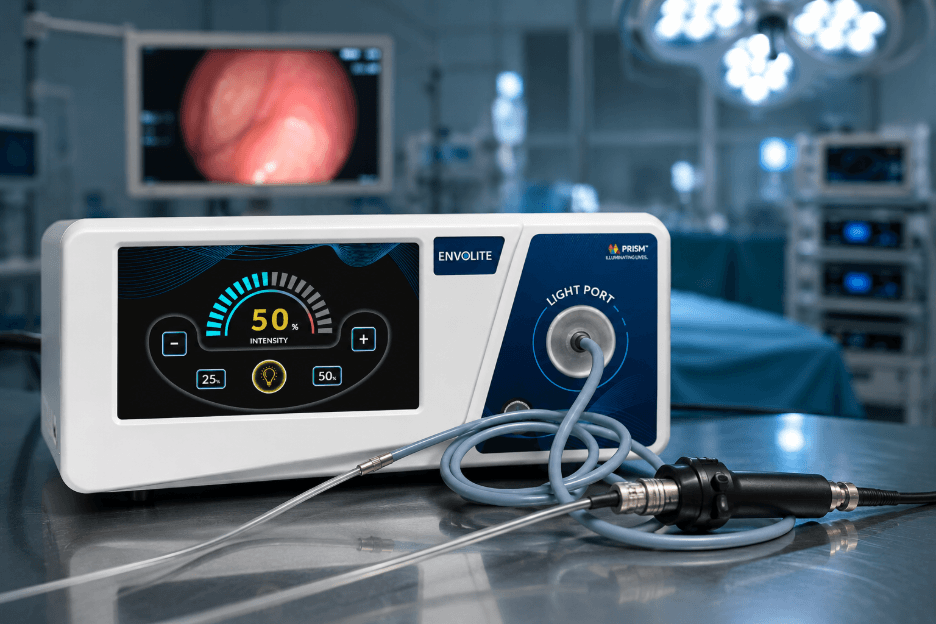
Also, the quality of the endoscopic light source plays a big role in what you can actually see. With advanced LED light sources, you get stable illumination and better color rendering, so surgeons can work with a clearer but also more natural view of the surgical field.
Why Visualisation Matters More Than Ever
In minimally invasive surgery, every decision depends on what the surgeon sees on the monitor.
The ability to clearly identify tissue planes, blood vessels, nerves, and lesions can significantly influence intraoperative decision-making.
This becomes especially important in:
Advanced laparoscopy
Endoscopic sinus surgery
Urological procedures
Gynecological surgery
Skull base and ENT procedures
Modern endoscopic imaging systems are now incorporating image enhancement tech, electronic zoom, and advanced image processing that helps visibility in challenging surgical field.
The latest endoscopic camera platform designs are aiming for real time imaging, with minimal delays. So the surgeon gets immediate visual feedback during those critical moments.
And if you combine a good endoscopic light source with that, the whole setup helps with precision and confidence in the operating room.
Does 4K Actually Improve Surgical Performance?
Research doesn’t prove that 4K technology improves patient outcomes. However, a few studies point that ultra-high-definition imagery can bring real, tangible advantages.
Potential benefits include:
Better visualization of anatomical structures
Improved recognition of fine details
Enhanced surgeon confidence
Better identification of residual tissue
Improved intraoperative decision-making
Many surgeons say that advanced endoscopic imaging systems offer a more comfortable view during long procedures.
Additionally, modern setups are increasingly including things like image recording, user defined presets, and digital documentation tools, which makes them useful beyond the operating room.
The question for hospitals is not whether 4K automatically improves outcomes. The real question is whether better visualization can help surgeons perform increasingly demanding procedures more effectively.
When Does Upgrading to 4K Make Sense?
Not every hospital requires an immediate upgrade. However, investing in advanced Endoscopic Imaging Systems may provide long-term benefits for:
High-volume minimally invasive surgery centers
Teaching and academic hospitals
Complex specialties such as ENT and oncology
Facilities planning future-ready digital operating rooms
The capabilities of an advanced endoscopic camera system and a reliable endoscopic light source are increasingly important in building connected and technology-driven operating environments.
Is HD Still Relevant?
Absolutely.
HD systems are doing well for a lot of routine procedures, even as the surgical volumes keep going down. However, hospitals should look closely at whether their current Endoscopic Imaging Systems can really keep up with future clinical needs, digital integration, and the increasing procedural complexity.
In other words, technology decisions should be steered by long‑term clinical goals, and not by the stated specifications and numbers.
Conclusion
The debate around Endoscopic Imaging Systems is no longer just about HD versus 4K.
The real issue is whether the current visualization technology can keep up with the growing demands of modern surgery. As minimally invasive procedures keep evolving, surgeons need sharper, clearer images, better tissue differentiation, and advanced imaging capabilities that back precision, speed and efficiency.
For a lot of healthcare institutions, upgrading their Endoscopic Imaging Systems is becoming less of a “simple tech upgrade” and more like a strategic investment into future-ready surgical care.
Minimally invasive surgery has changed the way healthcare is delivered. From laparoscopy and ENT procedures to gynaecology and urology, surgeons today rely almost entirely on the images displayed on a monitor rather than direct visualisation of the anatomy.
This is why Endoscopic Imaging Systems have become one of the most important technologies in the operating room. As procedures become increasingly complex and precision-driven, hospitals are asking an important question: Is conventional HD imaging still enough, or is it time to move to 4K?
The Evolution of Surgical Visualisation
The journey of Endoscopic Imaging Systems has been marked by continuous innovation. At first there were standard-definition systems which slowly got replaced by HD technology, with better image clarity, and becoming a benchmark for minimally invasive surgeries.
Today, the industry is moving toward 4K-enabled Endoscopic Imaging Systems that offer sharper details and better visualization.
The demand for advanced imaging is being driven by:
Greater surgical precision requirements
Increasingly complex procedures
Better tissue differentiation
Integration with digital operating rooms
Growing emphasis on surgical education and documentation
For hospitals, visualization technology is no longer just an equipment; it is becoming a strategic investment.
What Makes 4K Different from HD?
A 4K system delivers nearly four times the resolution of Full HD imaging. However, the benefit extends far beyond a sharper picture.
Modern Endoscopic Imaging Systems provide:
Better visualization of fine anatomical structures
Superior color reproduction
Enhanced contrast between tissues
Improved image magnification with minimal pixelation
Greater visibility of delicate structures and blood vessels
Many next-generation platforms also incorporate technologies such as high-performance CMOS sensors, image enhancement algorithms, digital zoom, and real-time image processing to further improve visualisation.
A modern endoscopic camera system does far more than capture images. It processes and enhances visual information to help surgeons identify subtle anatomical details during procedures.
Also, the quality of the endoscopic light source plays a big role in what you can actually see. With advanced LED light sources, you get stable illumination and better color rendering, so surgeons can work with a clearer but also more natural view of the surgical field.
Why Visualisation Matters More Than Ever
In minimally invasive surgery, every decision depends on what the surgeon sees on the monitor.
The ability to clearly identify tissue planes, blood vessels, nerves, and lesions can significantly influence intraoperative decision-making.
This becomes especially important in:
Advanced laparoscopy
Endoscopic sinus surgery
Urological procedures
Gynecological surgery
Skull base and ENT procedures
Modern endoscopic imaging systems are now incorporating image enhancement tech, electronic zoom, and advanced image processing that helps visibility in challenging surgical field.
The latest endoscopic camera platform designs are aiming for real time imaging, with minimal delays. So the surgeon gets immediate visual feedback during those critical moments.
And if you combine a good endoscopic light source with that, the whole setup helps with precision and confidence in the operating room.
Does 4K Actually Improve Surgical Performance?
Research doesn’t prove that 4K technology improves patient outcomes. However, a few studies point that ultra-high-definition imagery can bring real, tangible advantages.
Potential benefits include:
Better visualization of anatomical structures
Improved recognition of fine details
Enhanced surgeon confidence
Better identification of residual tissue
Improved intraoperative decision-making
Many surgeons say that advanced endoscopic imaging systems offer a more comfortable view during long procedures.
Additionally, modern setups are increasingly including things like image recording, user defined presets, and digital documentation tools, which makes them useful beyond the operating room.
The question for hospitals is not whether 4K automatically improves outcomes. The real question is whether better visualization can help surgeons perform increasingly demanding procedures more effectively.
When Does Upgrading to 4K Make Sense?
Not every hospital requires an immediate upgrade. However, investing in advanced Endoscopic Imaging Systems may provide long-term benefits for:
High-volume minimally invasive surgery centers
Teaching and academic hospitals
Complex specialties such as ENT and oncology
Facilities planning future-ready digital operating rooms
The capabilities of an advanced endoscopic camera system and a reliable endoscopic light source are increasingly important in building connected and technology-driven operating environments.
Is HD Still Relevant?
Absolutely.
HD systems are doing well for a lot of routine procedures, even as the surgical volumes keep going down. However, hospitals should look closely at whether their current Endoscopic Imaging Systems can really keep up with future clinical needs, digital integration, and the increasing procedural complexity.
In other words, technology decisions should be steered by long‑term clinical goals, and not by the stated specifications and numbers.
Conclusion
The debate around Endoscopic Imaging Systems is no longer just about HD versus 4K.
The real issue is whether the current visualization technology can keep up with the growing demands of modern surgery. As minimally invasive procedures keep evolving, surgeons need sharper, clearer images, better tissue differentiation, and advanced imaging capabilities that back precision, speed and efficiency.
For a lot of healthcare institutions, upgrading their Endoscopic Imaging Systems is becoming less of a “simple tech upgrade” and more like a strategic investment into future-ready surgical care.
Share:
Share
RELATED ARTICLES
Read more from our blogs
What Are the Different Focus Modes in Modern Surgical Theatre Lights?
What Are the Different Focus Modes in Modern Surgical Theatre Lights?

How Advanced MedTech Solutions Are Improving Surgical Precision and Efficiency
How Advanced MedTech Solutions Are Improving Surgical Precision and Efficiency

How Hospitals Should Evaluate Medical Equipment Before Procurement
How Hospitals Should Evaluate Medical Equipment Before Procurement

C-Arm Compatible OT Tables: What Hospitals Should Check Before Buying
C-Arm Compatible OT Tables: What Hospitals Should Check Before Buying
Products
Get in touch


info@matrixmedicals.in

+91 7304411451
+91 9821235552
Copyright © 2026 Matrix Medicals Pvt. Ltd., All rights reserved.
Products
Get in touch
info@matrixmedicals.in
+91 7304411451
+91 9821235552
Copyright © 2026 Matrix Medicals Pvt. Ltd., All rights reserved.
Contact Us
Contact Us
Contact Us