Global Conflicts, Local Consequences: How Wars Are Disrupting the Medical Equipment Supply Chain
Global Conflicts, Local Consequences: How Wars Are Disrupting the Medical Equipment Supply Chain
Share:
Share
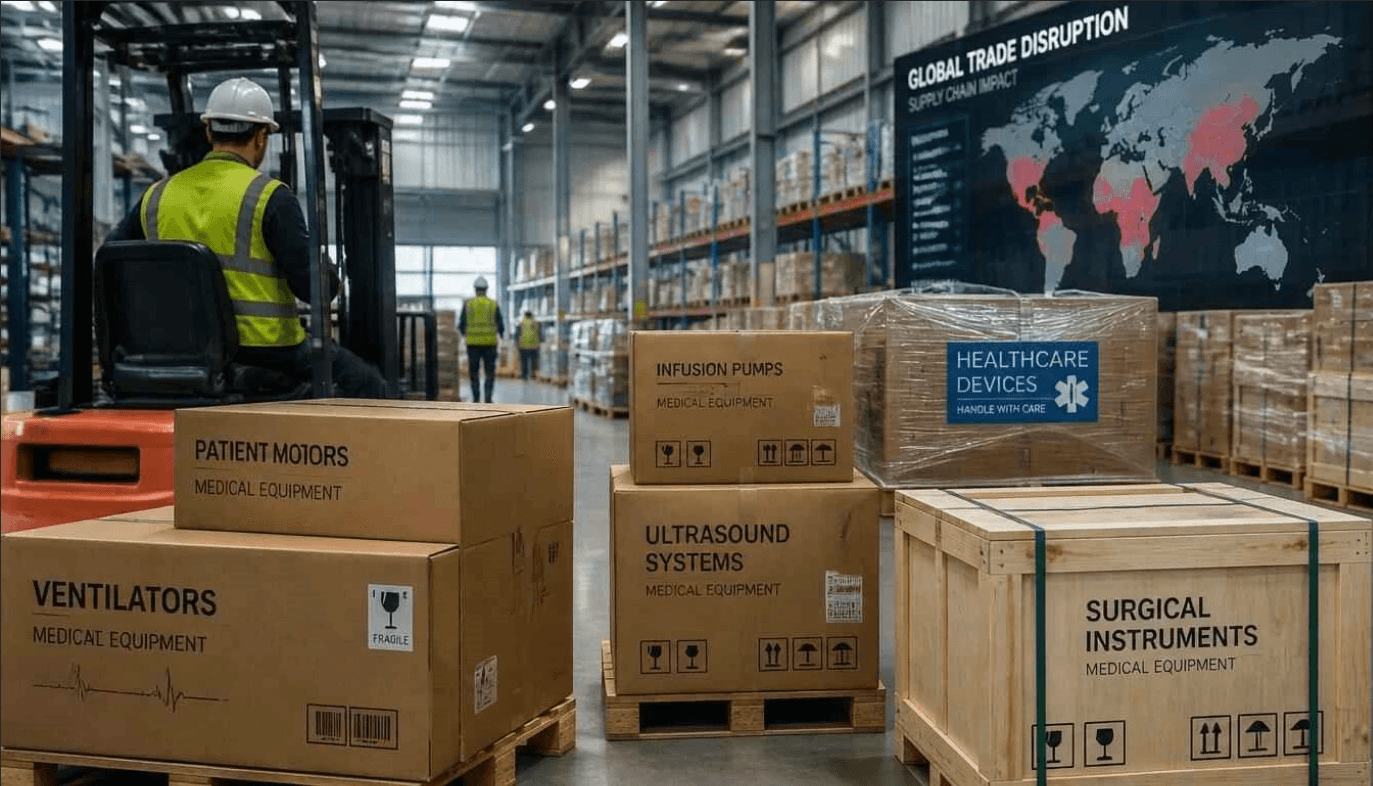
War and geopolitical tensions don’t stay limited to news headlines. In recent years, conflicts in regions like the Middle East and Eastern Europe have started affecting something very practical, how medical equipment moves across the world.
Shipping routes get delayed, cargo movement slows down, and deliveries don’t always arrive when they’re expected to. For hospitals, that shows up as long waiting times for equipment, higher costs, and less certainty when planning new OT setups or upgrades.
The challenge comes from how medical equipment is built. Devices used in operating theatres, like surgical lights, OT tables, and electrosurgical generators, rely on this long chain of parts and materials. You’ve got semiconductors, sensors, electronics, specialty metals, and even the packaging materials, all pulled from different places before the final product is even ready.
When major corridors like the Suez Canal or Strait of Hormuz run into disruption, everything tends to slow down, quite a bit. Freight prices rise; insurance gets pricier, and shipments are often redirected, sometimes in a way that’s not ideal. So in the end manufacturers see extended production cycles, while hospitals get stuck waiting longer to receive essential equipment on time.
The Impact on Hospitals, Healthcare Providers, and Patients
Supply chain issues are now creating real headaches for hospitals and healthcare providers. Lots of facilities are putting OT upgrade and modernization plans on hold, because equipment deliveries take way longer than they used to. Even once an order is placed, hospitals are still waiting for months, sometimes without much clarity.
Then there’s the cost side; medical equipment prices have gone up too, and it adds extra pressure to budgets that are already stretched. On top of that, it’s harder to get spare parts and maintenance support, so equipment doesn’t run as smoothly as it should.
Today, hospitals are not only looking for advanced technology. They also want suppliers they can depend on for timely delivery, service support, and uninterrupted availability of products when needed.
India's Import Dependency: A Challenge Exposed by Global Uncertainty
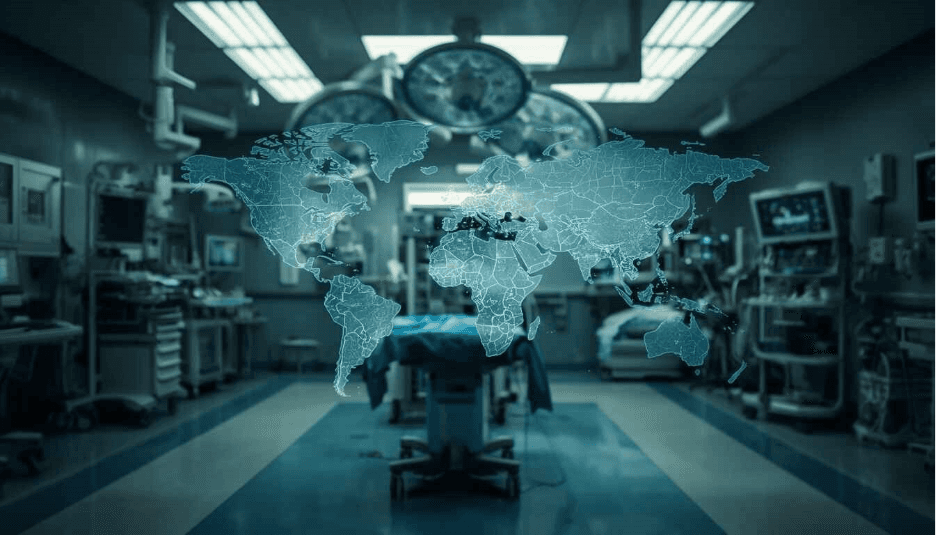
Even though India’s medical device industry has grown in a steady way, the nation still leans a lot on imports for various advanced technologies. Right now, close to 60% of medical devices come from outside, especially high-end imaging systems, electronic hardware, and more specialized surgical technologies.
Why This Becomes a Challenge During Global Disruptions
When conflicts touch manufacturing, trade routes, or international logistics, the consequences show up across the healthcare sector. Hospitals can end up with equipment stuck in transit even while demand stays high. At the same time currency changes and escalating transport costs can make imported technologies a bit pricier than planned.
These strains have brought attention to something the industry has known for a long time: relying on overseas suppliers can turn into a weak point fast, especially when the wider world gets unsure or unstable.
How Matrix Medicals Supports the Make in India Vision for Healthcare
India's push towards local manufacturing is helping reduce some of the challenges that come with depending heavily on imported medical technologies.
The Matrix Medicals Perspective
Over the last 30 years, Matrix Medicals has been working with hospitals at different stages of growth, and it has seen firsthand how supply delays can mess with healthcare projects. During its long-standing partnership with EPMD, Matrix supports the uptake of OT solutions that are manufactured in India, not just as an idea but in practice.
One of the biggest advantages of products made locally is how they tend to arrive faster. Hospitals can benefit from shorter lead times, quicker setups, and more immediate access to service help when needed. And then there is the spare parts availability plus technical assistance that is within the country; this too helps lower downtime, overall.
So for healthcare providers, this usually means smoother continuity and less uncertainty compared with depending fully on supply chains that come from overseas.
From Import Dependence to Healthcare Self-Reliance: The Road Ahead
Lately, what’s been happening around the world shows why leaning too much on imports can become a bit of a problem for healthcare. If India strengthens its own medical device manufacturing, not only could availability get better, but delays may also lessen, and there would be a more dependable, and steady supply of these critical healthcare technologies.
Looking Ahead
India already has the talent, market, and infrastructure needed to expand its presence in the MedTech sector. Continued investment in manufacturing, research, and technology development, along with support from both industry and government, can help drive the next phase of growth.
The conversation today is no longer about healthcare infrastructure. It is also about preparedness. The countries that build stronger and more reliable healthcare supply chains today are likely to be better positioned to handle future disruptions.
Conclusion: Turning Global Challenges into Local Opportunities
The last few years have shown that healthcare supply chains are not immune to global events. There are delays, costs that just keep climbing, and a lot of uncertainty about whether medical equipment will even be available on time, something hospitals and healthcare providers already know too well.
For India, the focus now is to cut back that dependence, and to build more solid local capabilities. Be it operation theatre lights, or other critical healthcare technologies, when manufacturing, service, and support are closer to home, it can make a real, noticeable difference.
With efforts like Make in India getting more traction, the sector is slowly, but definitely, moving the right way. Firms such as Matrix Medicals also have a part to play, helping hospitals get dependable solutions that come with local backing and service.
War and geopolitical tensions don’t stay limited to news headlines. In recent years, conflicts in regions like the Middle East and Eastern Europe have started affecting something very practical, how medical equipment moves across the world.
Shipping routes get delayed, cargo movement slows down, and deliveries don’t always arrive when they’re expected to. For hospitals, that shows up as long waiting times for equipment, higher costs, and less certainty when planning new OT setups or upgrades.
The challenge comes from how medical equipment is built. Devices used in operating theatres, like surgical lights, OT tables, and electrosurgical generators, rely on this long chain of parts and materials. You’ve got semiconductors, sensors, electronics, specialty metals, and even the packaging materials, all pulled from different places before the final product is even ready.
When major corridors like the Suez Canal or Strait of Hormuz run into disruption, everything tends to slow down, quite a bit. Freight prices rise; insurance gets pricier, and shipments are often redirected, sometimes in a way that’s not ideal. So in the end manufacturers see extended production cycles, while hospitals get stuck waiting longer to receive essential equipment on time.
The Impact on Hospitals, Healthcare Providers, and Patients
Supply chain issues are now creating real headaches for hospitals and healthcare providers. Lots of facilities are putting OT upgrade and modernization plans on hold, because equipment deliveries take way longer than they used to. Even once an order is placed, hospitals are still waiting for months, sometimes without much clarity.
Then there’s the cost side; medical equipment prices have gone up too, and it adds extra pressure to budgets that are already stretched. On top of that, it’s harder to get spare parts and maintenance support, so equipment doesn’t run as smoothly as it should.
Today, hospitals are not only looking for advanced technology. They also want suppliers they can depend on for timely delivery, service support, and uninterrupted availability of products when needed.
India's Import Dependency: A Challenge Exposed by Global Uncertainty
Even though India’s medical device industry has grown in a steady way, the nation still leans a lot on imports for various advanced technologies. Right now, close to 60% of medical devices come from outside, especially high-end imaging systems, electronic hardware, and more specialized surgical technologies.
Why This Becomes a Challenge During Global Disruptions
When conflicts touch manufacturing, trade routes, or international logistics, the consequences show up across the healthcare sector. Hospitals can end up with equipment stuck in transit even while demand stays high. At the same time currency changes and escalating transport costs can make imported technologies a bit pricier than planned.
These strains have brought attention to something the industry has known for a long time: relying on overseas suppliers can turn into a weak point fast, especially when the wider world gets unsure or unstable.
How Matrix Medicals Supports the Make in India Vision for Healthcare
India's push towards local manufacturing is helping reduce some of the challenges that come with depending heavily on imported medical technologies.
The Matrix Medicals Perspective
Over the last 30 years, Matrix Medicals has been working with hospitals at different stages of growth, and it has seen firsthand how supply delays can mess with healthcare projects. During its long-standing partnership with EPMD, Matrix supports the uptake of OT solutions that are manufactured in India, not just as an idea but in practice.
One of the biggest advantages of products made locally is how they tend to arrive faster. Hospitals can benefit from shorter lead times, quicker setups, and more immediate access to service help when needed. And then there is the spare parts availability plus technical assistance that is within the country; this too helps lower downtime, overall.
So for healthcare providers, this usually means smoother continuity and less uncertainty compared with depending fully on supply chains that come from overseas.
From Import Dependence to Healthcare Self-Reliance: The Road Ahead
Lately, what’s been happening around the world shows why leaning too much on imports can become a bit of a problem for healthcare. If India strengthens its own medical device manufacturing, not only could availability get better, but delays may also lessen, and there would be a more dependable, and steady supply of these critical healthcare technologies.
Looking Ahead
India already has the talent, market, and infrastructure needed to expand its presence in the MedTech sector. Continued investment in manufacturing, research, and technology development, along with support from both industry and government, can help drive the next phase of growth.
The conversation today is no longer about healthcare infrastructure. It is also about preparedness. The countries that build stronger and more reliable healthcare supply chains today are likely to be better positioned to handle future disruptions.
Conclusion: Turning Global Challenges into Local Opportunities
The last few years have shown that healthcare supply chains are not immune to global events. There are delays, costs that just keep climbing, and a lot of uncertainty about whether medical equipment will even be available on time, something hospitals and healthcare providers already know too well.
For India, the focus now is to cut back that dependence, and to build more solid local capabilities. Be it operation theatre lights, or other critical healthcare technologies, when manufacturing, service, and support are closer to home, it can make a real, noticeable difference.
With efforts like Make in India getting more traction, the sector is slowly, but definitely, moving the right way. Firms such as Matrix Medicals also have a part to play, helping hospitals get dependable solutions that come with local backing and service.
Share:
Share
RELATED ARTICLES
Read more from our blogs

Why Is Saline-Compatible Cautery Machine Important in Urological Surgery?
Why Is Saline-Compatible Cautery Machine Important in Urological Surgery?

How Medical Laboratory Technology Is Improving the Speed and Accuracy of Diagnostics
How Medical Laboratory Technology Is Improving the Speed and Accuracy of Diagnostics
What Are the Different Focus Modes in Modern Surgical Theatre Lights?
What Are the Different Focus Modes in Modern Surgical Theatre Lights?

How Advanced MedTech Solutions Are Improving Surgical Precision and Efficiency
How Advanced MedTech Solutions Are Improving Surgical Precision and Efficiency
Products
Get in touch


info@matrixmedicals.in

+91 7304411451
+91 9821235552
Copyright © 2026 Matrix Medicals Pvt. Ltd., All rights reserved.
Products
Get in touch
info@matrixmedicals.in
+91 7304411451
+91 9821235552
Copyright © 2026 Matrix Medicals Pvt. Ltd., All rights reserved.
Contact Us
Contact Us
Contact Us