How OR Integration Systems Maintain Data Consistency Across the Operating Room
How OR Integration Systems Maintain Data Consistency Across the Operating Room

Share:
Share
The Operating Room Is Becoming More Data-Driven
A modern surgery is no longer just about the surgeon and the surgical instruments. Every procedure now generates a growing stream of information, endoscopic and laparoscopic video, patient vital signs, diagnostic images, surgical camera feeds, audio communication, surgical recordings, and patient-related information from hospital systems. When this information comes from multiple disconnected systems, it becomes difficult for surgeons and consultants to access the right information at the right time. This is where an OR integration system comes in, an emerging approach to bringing these sources into a more connected workflow. Surgical data collection and integration are still evolving fields, with research highlighting the need for better data structure, acquisition, storage, sharing, and governance.
Key message: Data consistency in the OR it’s not only about storing information. It’s more about making sure the relevant information is organized, easily accessible, and available to the surgical team at the moment it matters.
What Does "Data Consistency" Mean in an Operating Room?
Data consistency means the surgical team is working with relevant, accurate, and synchronized information. Think of a quick example: a surgeon is looking at an endoscopic image, a consultant needs to review that same feed remotely, and the team also has to pull up patient information or diagnostic pictures. If it’s a disconnected setup, it can turn into several devices and separate systems. But in an integrated environment, the goal is to make this information easier to access through one centralized workflow.
An OR integration system does not replace the hospital's core patient-record system. Instead, it acts as a connected interface that brings relevant clinical and surgical information together.
Why Data Management Can Be Difficult in a Traditional OR
Without criticizing conventional operating rooms, it's worth acknowledging their real challenges: multiple devices from different manufacturers, separate displays and control interfaces, surgical videos stored in different locations, difficulty accessing information across systems, repeated manual handling of data, challenges in sharing surgical content for consultation or teaching, and workflow interruptions when teams switch between systems.
Research into surgical data recording has identified multiple data types, including video, audio, movement, and other information, collected for purposes such as training, communication, and OR efficiency. This shows why managing surgical information is becoming increasingly complex.
How OR Integration Helps Bring Data Into One Connected Workflow
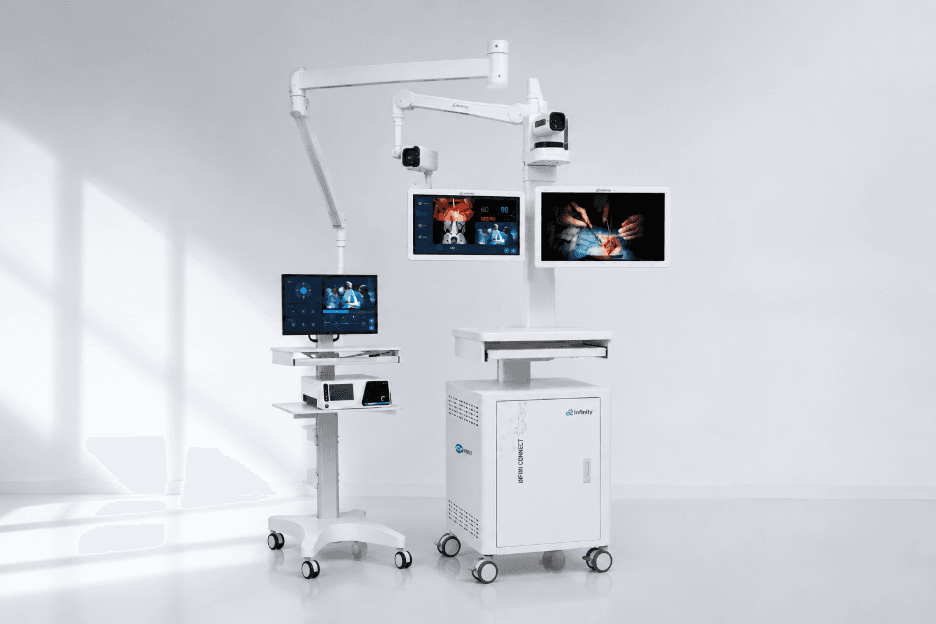
This is the core of what an OR integration system offers. It connects sources such as endoscopic and laparoscopic imaging, surgical cameras, OT light cameras, patient monitors, C-arms, audio-video communication, surgical displays, and recording systems. Instead of treating every device as a separate information source, an integrated system creates one centralized environment for managing and routing information.
Matrix Medicals' OR Infinity is a practical example. It’s built to link imaging, visualization, lighting, tables, electrosurgical units, and audio-video systems into one single controlled setting. In other words, it helps route video plus audio sources to displays and remote endpoints, while still allowing centralized content management, and it can work with platforms like HIS and PACS. So, for hospitals looking at OR integration in India, this sort of unified control environment shows where the technology is gradually heading.
How This Helps Surgeons During Surgery
Better access to visual information - Surgeons can look at the right images on chosen displays without needing to swap equipment or step away from the sterile field.
Centralized control - Rather than juggling several separate devices, the team can work from one unified interface.
Multiple views when required - The integrated system can show different video sources at the same time, which helps everyone compare crucial information during more intricate procedures.
Reduced workflow interruptions - When information is easier to access, the team spends less time managing equipment and more time on the procedure.
Matrix Medicals' OR Infinity, for example, supports multiple video sources and viewing formats such as PiP, PaP, and Quad-View, so teams can arrange the visual input in a way that matches their needs.
How Consultants and Remote Teams Benefit From Consistent Data Access
An OR integration system plays a central role in supporting remote consultation, real-time surgical collaboration, teaching, case discussions, sharing of surgical video, and multidisciplinary discussions. A consultant does not always need to be physically present in the OR to contribute to a case. With the right infrastructure, selected surgical feeds can be shared with authorized remote participants.
Matrix Medicals' InfiniConnect is a good example, an OR integration platform combining video management, recording, live streaming, conferencing, patient data integration, and connectivity with HIS/PACS systems.
Important angle: The benefit is not simply "more data." It is more organized access to relevant data, which makes collaboration easier.
Recording and Documentation: Creating a More Consistent Surgical Record
Integrated recording helps with better data management. Surgical video can be recorded and then stored systematically, which in turn supports post-operative review, medical education, training, quality improvements, case discussions and also documentation.
An important caveat: recording and storing surgical data has to be backed up by suitable privacy, consent, security, access-control, and governance rules. A systematic review pointed out that privacy, consent, data security, data ownership, and legal considerations count as key issues surrounding operating room recording.
OR Integration and the Future of Data-Driven Surgery
An OR integration system might gradually grow from just linking devices together, to building a smarter surgical data environment. Potential developments include better interoperability between medical devices, more organized surgical data, improved integration into hospital information systems, AI based interpretation of recordings, data supported surgical teaching, remote collaboration, and more standardized operating procedures.
Lately, new research continues to look into real-time perioperative data integration, because operating rooms produce huge streams of information that can end up scattered, when systems cannot communicate to each other properly.
Matrix Medicals' Perspective: Moving Toward a Connected Operating Room
Matrix Medicals views the operating room as a connected clinical ecosystem, rather than a collection of individual devices. Its OR Infinity platform brings together imaging, visualization, audio-video systems, recording, and connectivity, and systems such as Infini Connect can support patient data integration and connectivity with HIS/PACS.
The broader objective is to help hospitals move toward a coordinated OT environment where technology supports the surgical team's workflow, a positioning that places Matrix Medicals among providers of the best OR integration in India for hospitals looking to modernize their operating rooms. With secure data handling and HIPAA-compliant practices, where applicable, OR integration can also help guard sensitive patient and surgical information.
For hospitals that are adopting government-led digital health initiatives and modern healthcare infrastructure, integrated systems can enable better interoperability, more structured data management, and safer information exchange. Surgical recording can further support medico-legal documentation, clinical audits, post operative reviews, training, and quality management, when implemented with appropriate consent, access controls, and data security measures.
Conclusion: From Data Availability to Data Consistency
The future of OR integration isn't just about linking more devices, it is about making information more accessible, organized, and useful. For surgeons, this means simpler access to key visual data. For consultants, it means stronger teamwork and remote attendance. For hospitals, it is about smarter governance of surgical materials and digital workflow.
As OR integration in India develops, the focus will increasingly shift from "Where is the data?" to "Can the right person access the right information at the right time?" The operating room of the future will not simply be equipped with more technology, it will be built around technology that can communicate, coordinate, and make surgical information easier to manage.
The Operating Room Is Becoming More Data-Driven
A modern surgery is no longer just about the surgeon and the surgical instruments. Every procedure now generates a growing stream of information, endoscopic and laparoscopic video, patient vital signs, diagnostic images, surgical camera feeds, audio communication, surgical recordings, and patient-related information from hospital systems. When this information comes from multiple disconnected systems, it becomes difficult for surgeons and consultants to access the right information at the right time. This is where an OR integration system comes in, an emerging approach to bringing these sources into a more connected workflow. Surgical data collection and integration are still evolving fields, with research highlighting the need for better data structure, acquisition, storage, sharing, and governance.
Key message: Data consistency in the OR it’s not only about storing information. It’s more about making sure the relevant information is organized, easily accessible, and available to the surgical team at the moment it matters.
What Does "Data Consistency" Mean in an Operating Room?
Data consistency means the surgical team is working with relevant, accurate, and synchronized information. Think of a quick example: a surgeon is looking at an endoscopic image, a consultant needs to review that same feed remotely, and the team also has to pull up patient information or diagnostic pictures. If it’s a disconnected setup, it can turn into several devices and separate systems. But in an integrated environment, the goal is to make this information easier to access through one centralized workflow.
An OR integration system does not replace the hospital's core patient-record system. Instead, it acts as a connected interface that brings relevant clinical and surgical information together.
Why Data Management Can Be Difficult in a Traditional OR
Without criticizing conventional operating rooms, it's worth acknowledging their real challenges: multiple devices from different manufacturers, separate displays and control interfaces, surgical videos stored in different locations, difficulty accessing information across systems, repeated manual handling of data, challenges in sharing surgical content for consultation or teaching, and workflow interruptions when teams switch between systems.
Research into surgical data recording has identified multiple data types, including video, audio, movement, and other information, collected for purposes such as training, communication, and OR efficiency. This shows why managing surgical information is becoming increasingly complex.
How OR Integration Helps Bring Data Into One Connected Workflow
This is the core of what an OR integration system offers. It connects sources such as endoscopic and laparoscopic imaging, surgical cameras, OT light cameras, patient monitors, C-arms, audio-video communication, surgical displays, and recording systems. Instead of treating every device as a separate information source, an integrated system creates one centralized environment for managing and routing information.
Matrix Medicals' OR Infinity is a practical example. It’s built to link imaging, visualization, lighting, tables, electrosurgical units, and audio-video systems into one single controlled setting. In other words, it helps route video plus audio sources to displays and remote endpoints, while still allowing centralized content management, and it can work with platforms like HIS and PACS. So, for hospitals looking at OR integration in India, this sort of unified control environment shows where the technology is gradually heading.
How This Helps Surgeons During Surgery
Better access to visual information - Surgeons can look at the right images on chosen displays without needing to swap equipment or step away from the sterile field.
Centralized control - Rather than juggling several separate devices, the team can work from one unified interface.
Multiple views when required - The integrated system can show different video sources at the same time, which helps everyone compare crucial information during more intricate procedures.
Reduced workflow interruptions - When information is easier to access, the team spends less time managing equipment and more time on the procedure.
Matrix Medicals' OR Infinity, for example, supports multiple video sources and viewing formats such as PiP, PaP, and Quad-View, so teams can arrange the visual input in a way that matches their needs.
How Consultants and Remote Teams Benefit From Consistent Data Access
An OR integration system plays a central role in supporting remote consultation, real-time surgical collaboration, teaching, case discussions, sharing of surgical video, and multidisciplinary discussions. A consultant does not always need to be physically present in the OR to contribute to a case. With the right infrastructure, selected surgical feeds can be shared with authorized remote participants.
Matrix Medicals' InfiniConnect is a good example, an OR integration platform combining video management, recording, live streaming, conferencing, patient data integration, and connectivity with HIS/PACS systems.
Important angle: The benefit is not simply "more data." It is more organized access to relevant data, which makes collaboration easier.
Recording and Documentation: Creating a More Consistent Surgical Record
Integrated recording helps with better data management. Surgical video can be recorded and then stored systematically, which in turn supports post-operative review, medical education, training, quality improvements, case discussions and also documentation.
An important caveat: recording and storing surgical data has to be backed up by suitable privacy, consent, security, access-control, and governance rules. A systematic review pointed out that privacy, consent, data security, data ownership, and legal considerations count as key issues surrounding operating room recording.
OR Integration and the Future of Data-Driven Surgery
An OR integration system might gradually grow from just linking devices together, to building a smarter surgical data environment. Potential developments include better interoperability between medical devices, more organized surgical data, improved integration into hospital information systems, AI based interpretation of recordings, data supported surgical teaching, remote collaboration, and more standardized operating procedures.
Lately, new research continues to look into real-time perioperative data integration, because operating rooms produce huge streams of information that can end up scattered, when systems cannot communicate to each other properly.
Matrix Medicals' Perspective: Moving Toward a Connected Operating Room
Matrix Medicals views the operating room as a connected clinical ecosystem, rather than a collection of individual devices. Its OR Infinity platform brings together imaging, visualization, audio-video systems, recording, and connectivity, and systems such as Infini Connect can support patient data integration and connectivity with HIS/PACS.
The broader objective is to help hospitals move toward a coordinated OT environment where technology supports the surgical team's workflow, a positioning that places Matrix Medicals among providers of the best OR integration in India for hospitals looking to modernize their operating rooms. With secure data handling and HIPAA-compliant practices, where applicable, OR integration can also help guard sensitive patient and surgical information.
For hospitals that are adopting government-led digital health initiatives and modern healthcare infrastructure, integrated systems can enable better interoperability, more structured data management, and safer information exchange. Surgical recording can further support medico-legal documentation, clinical audits, post operative reviews, training, and quality management, when implemented with appropriate consent, access controls, and data security measures.
Conclusion: From Data Availability to Data Consistency
The future of OR integration isn't just about linking more devices, it is about making information more accessible, organized, and useful. For surgeons, this means simpler access to key visual data. For consultants, it means stronger teamwork and remote attendance. For hospitals, it is about smarter governance of surgical materials and digital workflow.
As OR integration in India develops, the focus will increasingly shift from "Where is the data?" to "Can the right person access the right information at the right time?" The operating room of the future will not simply be equipped with more technology, it will be built around technology that can communicate, coordinate, and make surgical information easier to manage.
Share:
Share
RELATED ARTICLES
Read more from our blogs

How Medical Laboratory Technology Is Improving the Speed and Accuracy of Diagnostics
How Medical Laboratory Technology Is Improving the Speed and Accuracy of Diagnostics
What Are the Different Focus Modes in Modern Surgical Theatre Lights?
What Are the Different Focus Modes in Modern Surgical Theatre Lights?

How Advanced MedTech Solutions Are Improving Surgical Precision and Efficiency
How Advanced MedTech Solutions Are Improving Surgical Precision and Efficiency

How Hospitals Should Evaluate Medical Equipment Before Procurement
How Hospitals Should Evaluate Medical Equipment Before Procurement
Products
Get in touch


info@matrixmedicals.in

+91 7304411451
+91 9821235552
Copyright © 2026 Matrix Medicals Pvt. Ltd., All rights reserved.
Products
Get in touch
info@matrixmedicals.in
+91 7304411451
+91 9821235552
Copyright © 2026 Matrix Medicals Pvt. Ltd., All rights reserved.
Contact Us
Contact Us
Contact Us