Why Depth of Illumination Matters in Deep Surgical Cavities
Why Depth of Illumination Matters in Deep Surgical Cavities

Share:
Share
A surgical light can look extremely bright when measured at the surface, but that does not always tell you what the surgeon sees deeper inside the operative field. In cardiac, neuro, spine, pediatric, and other procedures involving deep or narrow cavities, getting enough light to the actual working area can be challenging.
This is why depth of illumination matters when evaluating OT lights. It is not only about how much light a system can produce, but how well that illumination remains useful as the surgical field gets deeper.
What Is Depth of Illumination?
Depth of illumination refers to how effectively a surgical light maintains useful illumination across a vertical working range.
Consider a surgeon working inside a deep cavity. The opening may be well illuminated, while the actual operating site is several centimetres below it. If the light intensity falls significantly with depth, a high maximum lux value at the surface may not translate into equally good visibility where it is actually needed.
Depth of illumination is therefore recognised under IEC 60601-2-41 as one of the performance characteristics used to evaluate surgical luminaires.
Why Are Deep Surgical Cavities Difficult to Illuminate?
The deeper and narrower the surgical field becomes, the harder it can be for light to reach it effectively.
Surrounding tissue can restrict the available light paths. At the same time, the surgeon's head, shoulders, hands, and instruments can block part of the illumination coming from above. In a wide and open field, there are more paths for light to reach the operating area. Inside a narrow cavity, those options become limited.
Research on surgical lighting has identified cavity penetration and reducing shadows caused by obstructions as important considerations in surgical illumination.
Why Lux Alone Doesn't Tell the Whole Story
Lux is important, but it should not be the only specification used to compare LED OT lights.
A light may provide very high central illuminance under ideal testing conditions. During surgery, however, conditions are constantly changing. People move around the table, instruments enter the field, and the surgeon may need to work considerably below the surface.
This is why factors such as depth of illumination, light-field distribution, shadow dilution, focus, and colour rendering also matter.
Instead of asking only, "How bright is this light?", hospitals should also ask, "How well does this light perform throughout the surgical field?"
What Makes a Surgical Light Effective in Deep Cavities?
Several characteristics work together to provide good visibility at depth.
Depth of illumination helps maintain useful light as the operative site extends below the surface.
Focus control allows the light field to be adapted to the procedure. A broad surgical area and a narrow cavity do not necessarily need the same beam characteristics.
Shadow management helps when a surgeon's head, hands, or instruments interrupt part of the light path. This is especially important in deep fields where the available path for light is already restricted.
Uniform illumination helps avoid large differences between brighter and darker areas within the field.
Finally, colour fidelity remains important. Delivering light deeper into a cavity is only useful if tissue colours and subtle visual differences remain clear.
Good surgical theatre lights therefore need these characteristics to work together rather than treating depth as a standalone feature.
Different Procedures Need Different Light Fields
A deep surgical cavity is not the same in every procedure.
Neuro and pediatric surgery may involve small, narrow operative areas, while cardiac procedures can require illumination deeper within the surgical field. Minimally invasive procedures have another set of lighting requirements.
This makes flexibility important. Instead of using the same light field for every procedure, modern OT lights can provide different focus options that allow the surgical team to adapt the illumination to the size and depth of the operative area.
How Celesta Addresses Deep-Cavity Illumination
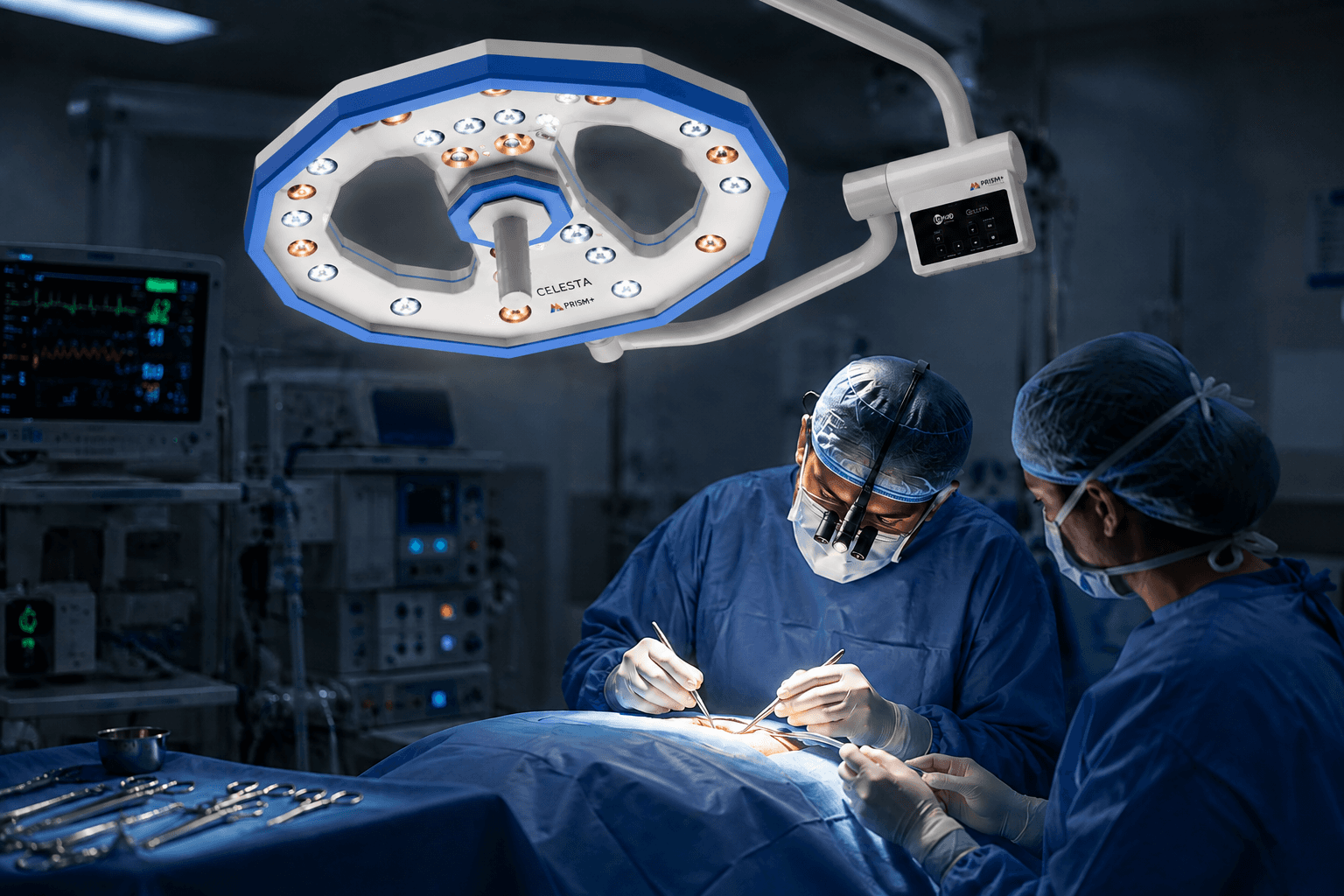
Celesta brings together several lighting characteristics that become particularly important when surgeons are working in deep or narrow surgical fields.
Depth of Illumination — LumiDepth™
Celesta's LumiDepth™ technology is designed to maintain illumination deeper within the surgical field. The system provides 99.3% isometric luminance, according to Matrix Medicals' product specifications, supporting consistent illumination within deeper operative areas.
Procedure-Specific Focus — Multiple Focus Modes
Different procedures need different light fields. Celesta provides:
Standard Focus Mode for general surgical applications
Narrow Focus Mode for smaller cavities, including neuro and pediatric applications
Deep Cavity Focus Mode for procedures requiring illumination deeper within the surgical field
Endo Focus Mode for minimally invasive procedures
Shadow Management — Up to 99% Shadow Elimination
Surgeons and instruments will inevitably block parts of the light during a procedure. Celesta provides up to 99% shadow elimination, helping maintain illumination when parts of the light path are obstructed.
Colour Fidelity — SpectraSure™
Seeing deeper is not just about seeing brighter. Tissue colours also need to remain clear. Celesta's SpectraSure™ technology provides a CRI above 98 and GAI of 97, supporting accurate colour representation within the surgical field.
Adjustable Illumination and Positioning
Celesta allows the surgical team to adjust illumination intensity, colour temperature, and focus according to the procedure. Its suspension system also supports all-axis positioning, making it easier to direct the light as the surgical field changes.
Together, these capabilities make Celesta a well-rounded option among advanced LED OT lights for procedures where maintaining visibility within deep and narrow cavities is especially important.
What Should Hospitals Look for?
When evaluating surgical theatre lights for deep-cavity procedures, hospitals should look beyond maximum lux.
Depth of illumination, shadow management, focus options, light-field uniformity, colour rendering, positioning, and heat management should all form part of the evaluation.
Where possible, it also helps to assess how the light performs under realistic conditions, particularly when the light path is partially obstructed or the working area extends deeper below the surface.
Looking Beyond Brightness
The challenge in deep-cavity surgery is not simply producing more light. It is getting useful light to the point where the surgeon is actually working.
That is why depth of illumination deserves attention when comparing modern OT lights. Brightness, depth, focus, shadow management, and colour quality all need to work together.
Ultimately, effective surgical illumination is not about having the highest number on a specification sheet. It is about maintaining clear and consistent visibility when the surgical field becomes deeper and more challenging.
A surgical light can look extremely bright when measured at the surface, but that does not always tell you what the surgeon sees deeper inside the operative field. In cardiac, neuro, spine, pediatric, and other procedures involving deep or narrow cavities, getting enough light to the actual working area can be challenging.
This is why depth of illumination matters when evaluating OT lights. It is not only about how much light a system can produce, but how well that illumination remains useful as the surgical field gets deeper.
What Is Depth of Illumination?
Depth of illumination refers to how effectively a surgical light maintains useful illumination across a vertical working range.
Consider a surgeon working inside a deep cavity. The opening may be well illuminated, while the actual operating site is several centimetres below it. If the light intensity falls significantly with depth, a high maximum lux value at the surface may not translate into equally good visibility where it is actually needed.
Depth of illumination is therefore recognised under IEC 60601-2-41 as one of the performance characteristics used to evaluate surgical luminaires.
Why Are Deep Surgical Cavities Difficult to Illuminate?
The deeper and narrower the surgical field becomes, the harder it can be for light to reach it effectively.
Surrounding tissue can restrict the available light paths. At the same time, the surgeon's head, shoulders, hands, and instruments can block part of the illumination coming from above. In a wide and open field, there are more paths for light to reach the operating area. Inside a narrow cavity, those options become limited.
Research on surgical lighting has identified cavity penetration and reducing shadows caused by obstructions as important considerations in surgical illumination.
Why Lux Alone Doesn't Tell the Whole Story
Lux is important, but it should not be the only specification used to compare LED OT lights.
A light may provide very high central illuminance under ideal testing conditions. During surgery, however, conditions are constantly changing. People move around the table, instruments enter the field, and the surgeon may need to work considerably below the surface.
This is why factors such as depth of illumination, light-field distribution, shadow dilution, focus, and colour rendering also matter.
Instead of asking only, "How bright is this light?", hospitals should also ask, "How well does this light perform throughout the surgical field?"
What Makes a Surgical Light Effective in Deep Cavities?
Several characteristics work together to provide good visibility at depth.
Depth of illumination helps maintain useful light as the operative site extends below the surface.
Focus control allows the light field to be adapted to the procedure. A broad surgical area and a narrow cavity do not necessarily need the same beam characteristics.
Shadow management helps when a surgeon's head, hands, or instruments interrupt part of the light path. This is especially important in deep fields where the available path for light is already restricted.
Uniform illumination helps avoid large differences between brighter and darker areas within the field.
Finally, colour fidelity remains important. Delivering light deeper into a cavity is only useful if tissue colours and subtle visual differences remain clear.
Good surgical theatre lights therefore need these characteristics to work together rather than treating depth as a standalone feature.
Different Procedures Need Different Light Fields
A deep surgical cavity is not the same in every procedure.
Neuro and pediatric surgery may involve small, narrow operative areas, while cardiac procedures can require illumination deeper within the surgical field. Minimally invasive procedures have another set of lighting requirements.
This makes flexibility important. Instead of using the same light field for every procedure, modern OT lights can provide different focus options that allow the surgical team to adapt the illumination to the size and depth of the operative area.
How Celesta Addresses Deep-Cavity Illumination
Celesta brings together several lighting characteristics that become particularly important when surgeons are working in deep or narrow surgical fields.
Depth of Illumination — LumiDepth™
Celesta's LumiDepth™ technology is designed to maintain illumination deeper within the surgical field. The system provides 99.3% isometric luminance, according to Matrix Medicals' product specifications, supporting consistent illumination within deeper operative areas.
Procedure-Specific Focus — Multiple Focus Modes
Different procedures need different light fields. Celesta provides:
Standard Focus Mode for general surgical applications
Narrow Focus Mode for smaller cavities, including neuro and pediatric applications
Deep Cavity Focus Mode for procedures requiring illumination deeper within the surgical field
Endo Focus Mode for minimally invasive procedures
Shadow Management — Up to 99% Shadow Elimination
Surgeons and instruments will inevitably block parts of the light during a procedure. Celesta provides up to 99% shadow elimination, helping maintain illumination when parts of the light path are obstructed.
Colour Fidelity — SpectraSure™
Seeing deeper is not just about seeing brighter. Tissue colours also need to remain clear. Celesta's SpectraSure™ technology provides a CRI above 98 and GAI of 97, supporting accurate colour representation within the surgical field.
Adjustable Illumination and Positioning
Celesta allows the surgical team to adjust illumination intensity, colour temperature, and focus according to the procedure. Its suspension system also supports all-axis positioning, making it easier to direct the light as the surgical field changes.
Together, these capabilities make Celesta a well-rounded option among advanced LED OT lights for procedures where maintaining visibility within deep and narrow cavities is especially important.
What Should Hospitals Look for?
When evaluating surgical theatre lights for deep-cavity procedures, hospitals should look beyond maximum lux.
Depth of illumination, shadow management, focus options, light-field uniformity, colour rendering, positioning, and heat management should all form part of the evaluation.
Where possible, it also helps to assess how the light performs under realistic conditions, particularly when the light path is partially obstructed or the working area extends deeper below the surface.
Looking Beyond Brightness
The challenge in deep-cavity surgery is not simply producing more light. It is getting useful light to the point where the surgeon is actually working.
That is why depth of illumination deserves attention when comparing modern OT lights. Brightness, depth, focus, shadow management, and colour quality all need to work together.
Ultimately, effective surgical illumination is not about having the highest number on a specification sheet. It is about maintaining clear and consistent visibility when the surgical field becomes deeper and more challenging.
Article support
Frequently asked questions
Frequently asked questions
Frequently asked questions
What is depth of illumination in OT lights?
Why is depth of illumination important in deep surgical cavities?
Is higher lux always better when choosing LED OT lights?
Which surgical procedures benefit from good depth of illumination?
How does Celesta support illumination in deep surgical cavities?
Share:
Share
RELATED ARTICLES
Read more from our blogs

How Advanced MedTech Solutions Are Improving Surgical Precision and Efficiency
How Advanced MedTech Solutions Are Improving Surgical Precision and Efficiency

How Hospitals Should Evaluate Medical Equipment Before Procurement
How Hospitals Should Evaluate Medical Equipment Before Procurement

C-Arm Compatible OT Tables: What Hospitals Should Check Before Buying
C-Arm Compatible OT Tables: What Hospitals Should Check Before Buying

How MedTech Companies Can Scale From Local Markets to Global Markets
How MedTech Companies Can Scale From Local Markets to Global Markets

Products
Get in touch


info@matrixmedicals.in

+91 7304411451
+91 9821235552
Copyright © 2026 Eclipse Prism Medical Devices (EPMD), All rights reserved.
Products
Get in touch
info@matrixmedicals.in
+91 7304411451
+91 9821235552
Copyright © 2026 Eclipse Prism Medical Devices (EPMD), All rights reserved.
Contact Us
Contact Us
Contact Us