What Are the Different Focus Modes in Modern Surgical Theatre Lights?
What Are the Different Focus Modes in Modern Surgical Theatre Lights?
Share:
Share
One Light Field Does Not Suit Every Procedure
Surgical lighting has come a long way from simply providing a bright field over the operating table. Different procedures create different visual challenges. A broad surgical site may need an evenly spread light field, while a narrow incision or deep cavity requires the light to be concentrated differently.
This is where focus modes in modern surgical theatre lights become useful. They allow the surgical team to adapt the light field to the procedure instead of working with one fixed illumination pattern.
What Does Focus Mean in Surgical Light?
Focus and brightness are not the same thing.
Brightness refers to the amount of light reaching the surgical field, usually measured in lux. Focus relates to how that illumination is distributed across the working area.
Two measurements commonly used to describe a surgical light field are D50 and D10. In simple terms, they help indicate the size of the concentrated central area and the wider illuminated field.
This matters because a wide surgical site and a small, deep cavity do not need the same light distribution. Modern led ot lights addresses this by allowing the light field to be adapted to different surgical situations.
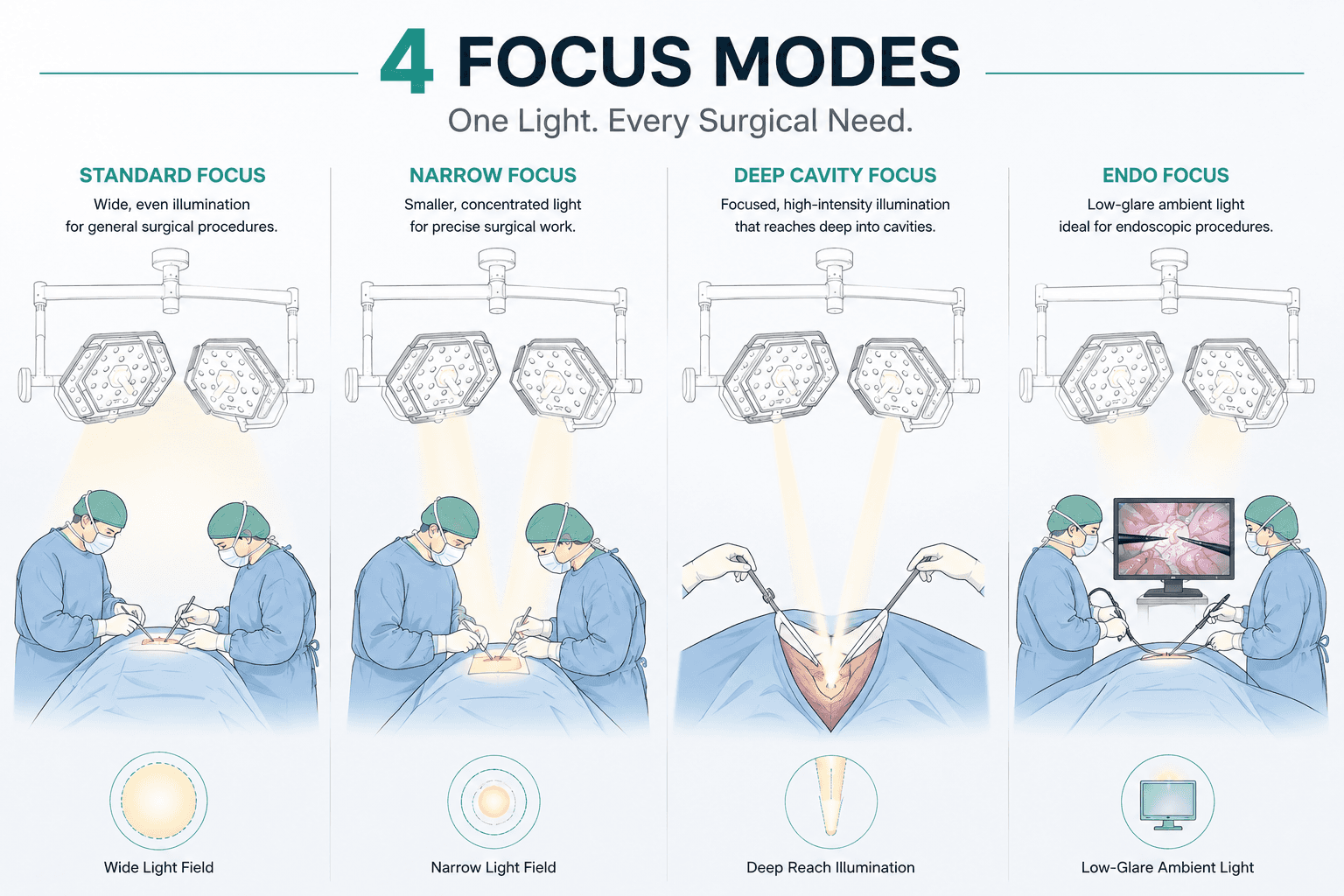
1. Standard Focus Mode – For General Surgical Procedures
Standard Focus Mode is the general-purpose setting in a multi-focus surgical light.
It provides a balanced light field that works well when the procedure does not require highly concentrated or specialized deep-cavity illumination. The wider field gives surgeons good coverage of the operative area and allows them to work comfortably as their attention moves across the surgical site.
For example, the Constella surgical light uses a Standard Focus configuration of approximately D50 150 mm and D10 250 mm, creating a relatively broad working field.
Standard Focus is therefore useful for general surgical applications where balanced illumination and flexibility are more important than concentrating the light into a small area.
2. Narrow Focus Mode – For Smaller Surgical Fields
There are procedures where illuminating a large surrounding area is unnecessary. What the surgeon needs instead is a more concentrated field directed towards a smaller operating site.
Narrow Focus Mode reduces the size of the illuminated field so that light can be concentrated where it is required.
Constella, for example, changes from approximately D50 150 mm and D10 250 mm in Standard Focus to D50 120 mm and D10 200 mm in Narrow Focus. The narrower configuration is intended for smaller operating cavities and applications such as neuro and pediatric procedures.
This demonstrates an important point about surgical theatre lights: better illumination does not always mean a larger or brighter field. The size of the light field should suit the area where the surgeon is actually working.

3. Deep Cavity Focus Mode – When Surface Brightness Is Not Enough
Deep surgical fields are particularly challenging for overhead lighting.
Surgical light can provide excellent illumination at the surface while still struggling to maintain useful light deeper inside a cavity. Surgeons, instruments and surrounding anatomy can also obstruct some of the light reaching the working area.
This is where Deep Cavity Focus Mode becomes important.
Rather than simply increasing brightness, the aim is to direct and maintain useful illumination deeper into the surgical field. This can be particularly relevant in procedures where the surgeon is working through a narrow opening or at greater depth.
Depth of illumination is also recognized as an important performance characteristic when evaluating surgical luminaires under IEC 60601-2-41.
When hospitals compare the best ot lights in india, this is why maximum lux should not be considered in isolation. How well the light performs deeper in the surgical field can be just as important as how bright it appears at the surface.
4. Endo Focus Mode – A Different Lighting Environment
Minimally invasive procedures create a different visual environment from open surgery.
During endoscopic or laparoscopic procedures, the surgeon spends much of the time looking at a monitor. Keeping the main surgical light at high intensity may therefore be unnecessary and can make the surrounding environment less comfortable for viewing displays.
Endo Focus Mode provides controlled ambient illumination instead.
The aim is to keep enough light in the operating room for the team to work safely around the patient and equipment while maintaining comfortable monitor visibility.
Some modern led ot lights provide multiple endoscopic lighting options. Constella, for example, offers warm, natural, and cool Endo Focus modes. This allows the surrounding lighting environment to be adjusted rather than relying on one fixed endoscopic setting.
Focus Mode vs Intensity: They Are Not the Same
The easiest way to understand the difference is:
Intensity determines how much light is delivered. Focus determines how that light is distributed.
A surgeon may need a narrow field without requiring maximum intensity. Another procedure may need a wider field at moderate intensity, while deep-cavity surgery presents an entirely different challenge.
This is why modern surgical theatre lights combine intensity adjustment with features such as focus control, depth illumination, color-temperature adjustment, and shadow management.
Simply increasing brightness cannot replace the ability to control where the illumination goes.
How Should Hospitals Evaluate Focus Modes When Choosing OT Lights?
When evaluating led ot lights, hospitals should first consider the types of procedures performed in the operating theatre.
A useful assessment should look at:
Available light-field sizes
Standard and narrow focus options
Depth of illumination
Dedicated deep-cavity modes
Endoscopic or ambient lighting modes
Ease of changing settings during surgery
Shadow management
Color rendering and color temperature
Stability and positioning of the light
Hospitals searching for the best ot lights in india should therefore avoid deciding based only on maximum lux. A light should ideally be evaluated according to how well it adapts to the actual visual demands of different procedures.

The Right Light Field for the Right Surgical Situation
Modern surgical lighting is not about using the same light field for every procedure.
Standard Focus provides balanced illumination for general surgery. Narrow Focus concentrates light over smaller surgical areas. Deep Cavity Focus helps maintain useful illumination deeper within the working field, while Endo Focus creates a more suitable environment for minimally invasive procedures.
The real value of modern surgical theatre lights lies in this adaptability. Instead of asking only how bright a light can get, hospitals should also consider how effectively that illumination can be shaped and controlled for the way their surgical teams work.
One Light Field Does Not Suit Every Procedure
Surgical lighting has come a long way from simply providing a bright field over the operating table. Different procedures create different visual challenges. A broad surgical site may need an evenly spread light field, while a narrow incision or deep cavity requires the light to be concentrated differently.
This is where focus modes in modern surgical theatre lights become useful. They allow the surgical team to adapt the light field to the procedure instead of working with one fixed illumination pattern.
What Does Focus Mean in Surgical Light?
Focus and brightness are not the same thing.
Brightness refers to the amount of light reaching the surgical field, usually measured in lux. Focus relates to how that illumination is distributed across the working area.
Two measurements commonly used to describe a surgical light field are D50 and D10. In simple terms, they help indicate the size of the concentrated central area and the wider illuminated field.
This matters because a wide surgical site and a small, deep cavity do not need the same light distribution. Modern led ot lights addresses this by allowing the light field to be adapted to different surgical situations.
1. Standard Focus Mode – For General Surgical Procedures
Standard Focus Mode is the general-purpose setting in a multi-focus surgical light.
It provides a balanced light field that works well when the procedure does not require highly concentrated or specialized deep-cavity illumination. The wider field gives surgeons good coverage of the operative area and allows them to work comfortably as their attention moves across the surgical site.
For example, the Constella surgical light uses a Standard Focus configuration of approximately D50 150 mm and D10 250 mm, creating a relatively broad working field.
Standard Focus is therefore useful for general surgical applications where balanced illumination and flexibility are more important than concentrating the light into a small area.
2. Narrow Focus Mode – For Smaller Surgical Fields
There are procedures where illuminating a large surrounding area is unnecessary. What the surgeon needs instead is a more concentrated field directed towards a smaller operating site.
Narrow Focus Mode reduces the size of the illuminated field so that light can be concentrated where it is required.
Constella, for example, changes from approximately D50 150 mm and D10 250 mm in Standard Focus to D50 120 mm and D10 200 mm in Narrow Focus. The narrower configuration is intended for smaller operating cavities and applications such as neuro and pediatric procedures.
This demonstrates an important point about surgical theatre lights: better illumination does not always mean a larger or brighter field. The size of the light field should suit the area where the surgeon is actually working.
3. Deep Cavity Focus Mode – When Surface Brightness Is Not Enough
Deep surgical fields are particularly challenging for overhead lighting.
Surgical light can provide excellent illumination at the surface while still struggling to maintain useful light deeper inside a cavity. Surgeons, instruments and surrounding anatomy can also obstruct some of the light reaching the working area.
This is where Deep Cavity Focus Mode becomes important.
Rather than simply increasing brightness, the aim is to direct and maintain useful illumination deeper into the surgical field. This can be particularly relevant in procedures where the surgeon is working through a narrow opening or at greater depth.
Depth of illumination is also recognized as an important performance characteristic when evaluating surgical luminaires under IEC 60601-2-41.
When hospitals compare the best ot lights in india, this is why maximum lux should not be considered in isolation. How well the light performs deeper in the surgical field can be just as important as how bright it appears at the surface.
4. Endo Focus Mode – A Different Lighting Environment
Minimally invasive procedures create a different visual environment from open surgery.
During endoscopic or laparoscopic procedures, the surgeon spends much of the time looking at a monitor. Keeping the main surgical light at high intensity may therefore be unnecessary and can make the surrounding environment less comfortable for viewing displays.
Endo Focus Mode provides controlled ambient illumination instead.
The aim is to keep enough light in the operating room for the team to work safely around the patient and equipment while maintaining comfortable monitor visibility.
Some modern led ot lights provide multiple endoscopic lighting options. Constella, for example, offers warm, natural, and cool Endo Focus modes. This allows the surrounding lighting environment to be adjusted rather than relying on one fixed endoscopic setting.
Focus Mode vs Intensity: They Are Not the Same
The easiest way to understand the difference is:
Intensity determines how much light is delivered. Focus determines how that light is distributed.
A surgeon may need a narrow field without requiring maximum intensity. Another procedure may need a wider field at moderate intensity, while deep-cavity surgery presents an entirely different challenge.
This is why modern surgical theatre lights combine intensity adjustment with features such as focus control, depth illumination, color-temperature adjustment, and shadow management.
Simply increasing brightness cannot replace the ability to control where the illumination goes.
How Should Hospitals Evaluate Focus Modes When Choosing OT Lights?
When evaluating led ot lights, hospitals should first consider the types of procedures performed in the operating theatre.
A useful assessment should look at:
Available light-field sizes
Standard and narrow focus options
Depth of illumination
Dedicated deep-cavity modes
Endoscopic or ambient lighting modes
Ease of changing settings during surgery
Shadow management
Color rendering and color temperature
Stability and positioning of the light
Hospitals searching for the best ot lights in india should therefore avoid deciding based only on maximum lux. A light should ideally be evaluated according to how well it adapts to the actual visual demands of different procedures.
The Right Light Field for the Right Surgical Situation
Modern surgical lighting is not about using the same light field for every procedure.
Standard Focus provides balanced illumination for general surgery. Narrow Focus concentrates light over smaller surgical areas. Deep Cavity Focus helps maintain useful illumination deeper within the working field, while Endo Focus creates a more suitable environment for minimally invasive procedures.
The real value of modern surgical theatre lights lies in this adaptability. Instead of asking only how bright a light can get, hospitals should also consider how effectively that illumination can be shaped and controlled for the way their surgical teams work.
Article support
Frequently asked questions
Frequently asked questions
Frequently asked questions
What are focus modes in surgical theatre lights?
What is the difference between Standard and Narrow Focus Mode?
Why is Deep Cavity Focus important in surgical lighting?
What is Endo Focus Mode in LED OT lights?
Are focus modes more important than maximum lux when choosing OT lights?
Share:
Share
RELATED ARTICLES
Read more from our blogs

How Advanced MedTech Solutions Are Improving Surgical Precision and Efficiency
How Advanced MedTech Solutions Are Improving Surgical Precision and Efficiency

How Hospitals Should Evaluate Medical Equipment Before Procurement
How Hospitals Should Evaluate Medical Equipment Before Procurement

C-Arm Compatible OT Tables: What Hospitals Should Check Before Buying
C-Arm Compatible OT Tables: What Hospitals Should Check Before Buying

How MedTech Companies Can Scale From Local Markets to Global Markets
How MedTech Companies Can Scale From Local Markets to Global Markets
Products
Get in touch


info@matrixmedicals.in

+91 7304411451
+91 9821235552
Copyright © 2026 Matrix Medicals Pvt. Ltd., All rights reserved.
Products
Get in touch
info@matrixmedicals.in
+91 7304411451
+91 9821235552
Copyright © 2026 Matrix Medicals Pvt. Ltd., All rights reserved.
Contact Us
Contact Us
Contact Us