How MedTech Companies Can Scale From Local Markets to Global Markets
How MedTech Companies Can Scale From Local Markets to Global Markets

Share:
Share
Building a successful line of operation theatre equipments in one market is only half the battle. A technology that performs brilliantly in Germany, the US, or Japan doesn't automatically translate into success in India. Stepping into a new market brings its own set of hurdles, because the regulatory obligations, healthcare infrastructure, and clinical routines, must line up together. Then there are the procurement procedures, pricing, distribution, installation, training, and the after-sales support side, all have to come together.
Global MedTech expansion needs more than a good product, it needs local market knowledge, regulatory understanding, commercial reach, and infrastructure to support the technology after it enters the market. India is an attractive but complex opportunity, where the right local partner can make market entry far more efficient.
Why MedTech Companies Struggle to Enter New Markets
Medical devices aren't like conventional products. They come with regulatory classification, import documentation, local compliance, and clinical validation requirements before they ever reach a hospital, on top of navigating procurement cycles, building a distribution network, and arranging ongoing technical and after-sales service. In India, the CDSCO (Central Drugs Standard Control Organisation) and the Medical Devices Rules, 2017 form the backbone of the regulatory framework. But regulatory approval is only the beginning, it doesn't mean a company is ready to sell, install, or support its technology in the field.
Step 1: Understand the Target Market Before Entering
Before investing in expansion, companies need real market intelligence, market size and growth, the competitor landscape, hospital purchasing behaviour, the public-versus-private split, clinical preferences, pricing expectations, and regional service capacity. For India, knowing which hospitals, specialties, and regions matter for a specific technology is far more useful than knowing the size of the overall medical equipment supplier market. Matrix's Solutions approach includes clinical and infrastructure assessment, helping align technology with real operating-room requirements.
Step 2: Build the Right Regulatory and Market-Access Strategy
Regulatory requirements differ by country and product category. For India, that means understanding CDSCO, the Medical Devices Rules, 2017, device classification, import licensing, documentation, regulatory representation, and post-market obligations. These requirements keep evolving, CDSCO, for instance, published updated guidance around medical-device software in 2026, which is why local regulatory awareness matters for international companies. Regulatory strategy should be built into market entry from the beginning, not treated as an afterthought.
Step 3: Localize the Product and Value Proposition
Localization doesn't necessarily mean redesigning the device. It can mean adapting the product configuration, clinical workflow, documentation, training, pricing, service packages, accessories, installation requirements, and positioning. Take OT lights or an advanced OR integration system: strong technical specifications on paper mean little if the system doesn't work with a hospital's existing infrastructure and workflow. The same applies to an endoscopic imaging system, image quality matters less than how smoothly it fits into a surgeon's routine. Global expansion doesn't mean selling the same product the same way everywhere.
Step 4: Establish a Strong Local Distribution and Commercial Network
A local partner is more than a company that moves boxes. A capable medical equipment supplier brings hospital access, regional sales reach, product demonstrations, clinical engagement, procurement knowledge, market feedback, installation coordination, and lasting customer relationships, effectively becoming an extension of the manufacturer's commercial and technical team. Matrix Medicals' Solutions portfolio includes distribution of electrosurgical units, OT lights, OT tables, endoscopic imaging systems, and OR integration solutions, backed by broader OT solution capabilities built over three decades in India.
Step 5: Don't Underestimate Installation, Training, and Clinical Support
Selling a device is not the same as successfully implementing it. Installation, commissioning, application training, clinical demonstrations, technical support, preventive maintenance, calibration, troubleshooting, and upgrades all determine whether a technology gets adopted or quietly gathers dust. This is where Matrix Medicals goes a step further: our operation theatre equipments business is backed by Surgikare, a dedicated after-sales service arm built specifically to handle installation, maintenance, calibration, and breakdown support with speed and consistency. Local technical and clinical support should be treated as part of the commercialization strategy, not an afterthought.
Step 6: Build for Long-Term Market Adoption, Not Just the First Sale
There's a real difference between market entry, adoption, and expansion. A company can win its first customer and still struggle to scale without spare parts, service infrastructure, technical support, clinical education, and a clear path for upgrades. Surgikare exists precisely to close this gap, giving international partners a dedicated service backbone across India, because lifecycle commercialization, not a single transaction, is what makes a technology stick.
Choosing the Right Local Partner for Global MedTech Expansion
For a MedTech company entering a new market, the choice of local partner can shape everything from market access to long-term adoption. A strong local partner should offer:
Market knowledge — understanding of local healthcare systems and purchasing behaviour
Regulatory awareness — familiarity with the country's device requirements
Hospital relationships — established access to relevant institutions
Clinical expertise — ability to communicate clinical value
Technical capability — installation, commissioning, and troubleshooting
Training infrastructure — capacity to train clinical and technical teams
After-sales service — maintenance, calibration, breakdown support, and spare parts
Regional reach — ability to go beyond a handful of major cities
Commercial capability — sales, demonstrations, and market development
Strategic collaboration — willingness to work as a long-term growth partner
Backed by a well-established pan-India distribution network and a strong sales and service team, Matrix Medicals delivers end-to-end solutions spanning pre-sales consultation, strategic channel development, clinical engagement, installation, training, and complete lifecycle support, with Surgikare anchoring our after-sales commitment. Our unconditional post-installation support ensures consistent performance, reliability, and long-term value for healthcare providers nationwide.
Building on three decades of proven leadership as a trusted medical equipment supplier in India, Matrix Medicals is now actively partnering with MedTech companies worldwide that have disruptive technologies and are seeking access to the Indian healthcare market. We offer more than distribution, we offer a complete commercialization pathway: building market presence, creating demand, developing channels, and driving adoption.
Conclusion - Global Growth Requires Local Expertise
The journey isn't simply local product to global market. It's technology, market understanding, regulatory access, localization, market entry, clinical adoption, lifecycle support, and scale. International MedTech companies need local expertise to understand how their technology fits into a country's healthcare ecosystem, and a partner equipped to support it long after installation, the way Surgikare supports Matrix Medicals' own portfolio.
The most successful MedTech companies won't simply enter new markets. They will build the right local ecosystem to grow within them, and at Matrix Medicals, we don't just distribute products, we commercialise innovation.
Building a successful line of operation theatre equipments in one market is only half the battle. A technology that performs brilliantly in Germany, the US, or Japan doesn't automatically translate into success in India. Stepping into a new market brings its own set of hurdles, because the regulatory obligations, healthcare infrastructure, and clinical routines, must line up together. Then there are the procurement procedures, pricing, distribution, installation, training, and the after-sales support side, all have to come together.
Global MedTech expansion needs more than a good product, it needs local market knowledge, regulatory understanding, commercial reach, and infrastructure to support the technology after it enters the market. India is an attractive but complex opportunity, where the right local partner can make market entry far more efficient.
Why MedTech Companies Struggle to Enter New Markets
Medical devices aren't like conventional products. They come with regulatory classification, import documentation, local compliance, and clinical validation requirements before they ever reach a hospital, on top of navigating procurement cycles, building a distribution network, and arranging ongoing technical and after-sales service. In India, the CDSCO (Central Drugs Standard Control Organisation) and the Medical Devices Rules, 2017 form the backbone of the regulatory framework. But regulatory approval is only the beginning, it doesn't mean a company is ready to sell, install, or support its technology in the field.
Step 1: Understand the Target Market Before Entering
Before investing in expansion, companies need real market intelligence, market size and growth, the competitor landscape, hospital purchasing behaviour, the public-versus-private split, clinical preferences, pricing expectations, and regional service capacity. For India, knowing which hospitals, specialties, and regions matter for a specific technology is far more useful than knowing the size of the overall medical equipment supplier market. Matrix's Solutions approach includes clinical and infrastructure assessment, helping align technology with real operating-room requirements.
Step 2: Build the Right Regulatory and Market-Access Strategy
Regulatory requirements differ by country and product category. For India, that means understanding CDSCO, the Medical Devices Rules, 2017, device classification, import licensing, documentation, regulatory representation, and post-market obligations. These requirements keep evolving, CDSCO, for instance, published updated guidance around medical-device software in 2026, which is why local regulatory awareness matters for international companies. Regulatory strategy should be built into market entry from the beginning, not treated as an afterthought.
Step 3: Localize the Product and Value Proposition
Localization doesn't necessarily mean redesigning the device. It can mean adapting the product configuration, clinical workflow, documentation, training, pricing, service packages, accessories, installation requirements, and positioning. Take OT lights or an advanced OR integration system: strong technical specifications on paper mean little if the system doesn't work with a hospital's existing infrastructure and workflow. The same applies to an endoscopic imaging system, image quality matters less than how smoothly it fits into a surgeon's routine. Global expansion doesn't mean selling the same product the same way everywhere.
Step 4: Establish a Strong Local Distribution and Commercial Network
A local partner is more than a company that moves boxes. A capable medical equipment supplier brings hospital access, regional sales reach, product demonstrations, clinical engagement, procurement knowledge, market feedback, installation coordination, and lasting customer relationships, effectively becoming an extension of the manufacturer's commercial and technical team. Matrix Medicals' Solutions portfolio includes distribution of electrosurgical units, OT lights, OT tables, endoscopic imaging systems, and OR integration solutions, backed by broader OT solution capabilities built over three decades in India.
Step 5: Don't Underestimate Installation, Training, and Clinical Support
Selling a device is not the same as successfully implementing it. Installation, commissioning, application training, clinical demonstrations, technical support, preventive maintenance, calibration, troubleshooting, and upgrades all determine whether a technology gets adopted or quietly gathers dust. This is where Matrix Medicals goes a step further: our operation theatre equipments business is backed by Surgikare, a dedicated after-sales service arm built specifically to handle installation, maintenance, calibration, and breakdown support with speed and consistency. Local technical and clinical support should be treated as part of the commercialization strategy, not an afterthought.
Step 6: Build for Long-Term Market Adoption, Not Just the First Sale
There's a real difference between market entry, adoption, and expansion. A company can win its first customer and still struggle to scale without spare parts, service infrastructure, technical support, clinical education, and a clear path for upgrades. Surgikare exists precisely to close this gap, giving international partners a dedicated service backbone across India, because lifecycle commercialization, not a single transaction, is what makes a technology stick.
Choosing the Right Local Partner for Global MedTech Expansion
For a MedTech company entering a new market, the choice of local partner can shape everything from market access to long-term adoption. A strong local partner should offer:
Market knowledge — understanding of local healthcare systems and purchasing behaviour
Regulatory awareness — familiarity with the country's device requirements
Hospital relationships — established access to relevant institutions
Clinical expertise — ability to communicate clinical value
Technical capability — installation, commissioning, and troubleshooting
Training infrastructure — capacity to train clinical and technical teams
After-sales service — maintenance, calibration, breakdown support, and spare parts
Regional reach — ability to go beyond a handful of major cities
Commercial capability — sales, demonstrations, and market development
Strategic collaboration — willingness to work as a long-term growth partner
Backed by a well-established pan-India distribution network and a strong sales and service team, Matrix Medicals delivers end-to-end solutions spanning pre-sales consultation, strategic channel development, clinical engagement, installation, training, and complete lifecycle support, with Surgikare anchoring our after-sales commitment. Our unconditional post-installation support ensures consistent performance, reliability, and long-term value for healthcare providers nationwide.
Building on three decades of proven leadership as a trusted medical equipment supplier in India, Matrix Medicals is now actively partnering with MedTech companies worldwide that have disruptive technologies and are seeking access to the Indian healthcare market. We offer more than distribution, we offer a complete commercialization pathway: building market presence, creating demand, developing channels, and driving adoption.
Conclusion - Global Growth Requires Local Expertise
The journey isn't simply local product to global market. It's technology, market understanding, regulatory access, localization, market entry, clinical adoption, lifecycle support, and scale. International MedTech companies need local expertise to understand how their technology fits into a country's healthcare ecosystem, and a partner equipped to support it long after installation, the way Surgikare supports Matrix Medicals' own portfolio.
The most successful MedTech companies won't simply enter new markets. They will build the right local ecosystem to grow within them, and at Matrix Medicals, we don't just distribute products, we commercialise innovation.
Share:
Share
RELATED ARTICLES
Read more from our blogs
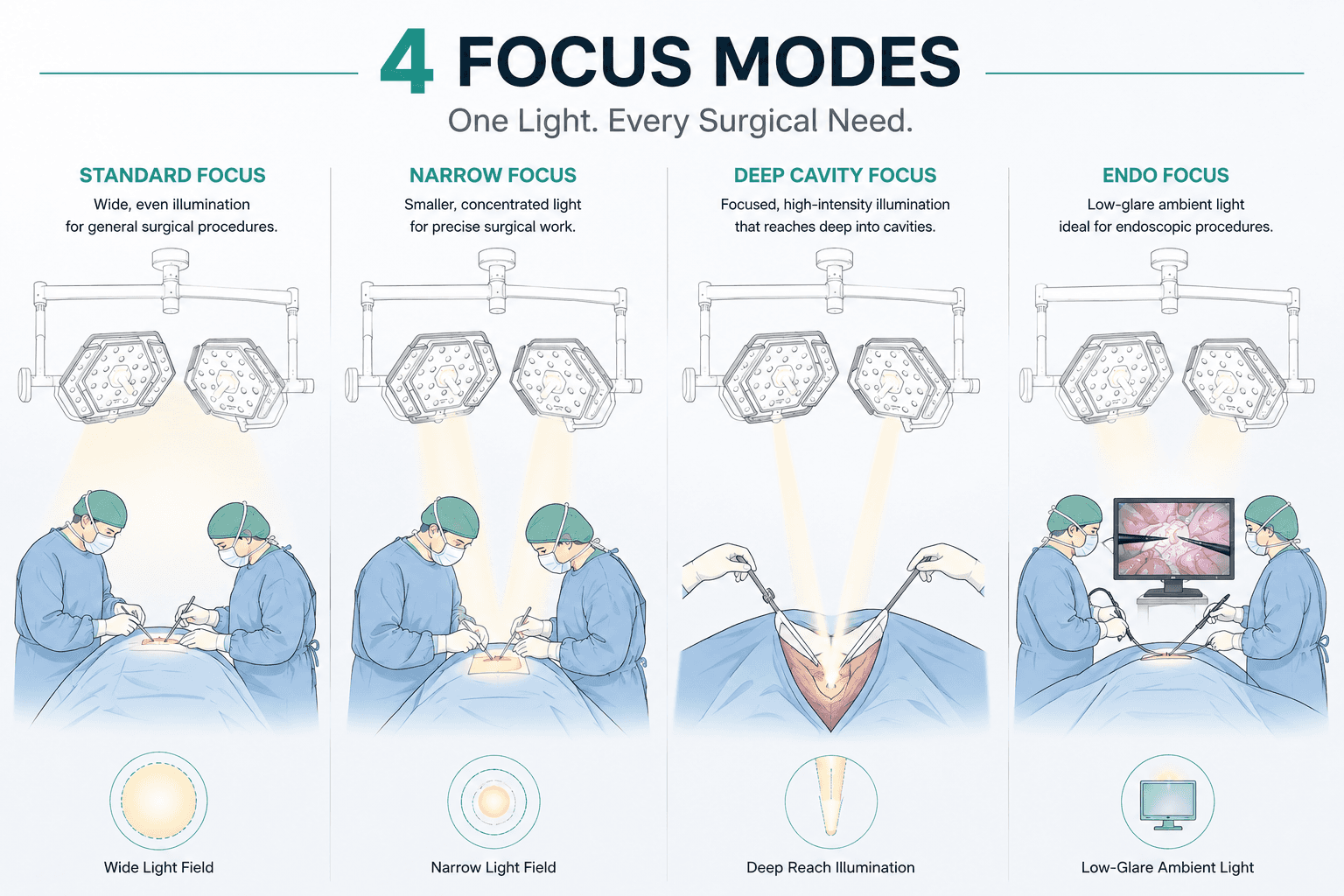
What Are the Different Focus Modes in Modern Surgical Theatre Lights?
What Are the Different Focus Modes in Modern Surgical Theatre Lights?

How Advanced MedTech Solutions Are Improving Surgical Precision and Efficiency
How Advanced MedTech Solutions Are Improving Surgical Precision and Efficiency

How Hospitals Should Evaluate Medical Equipment Before Procurement
How Hospitals Should Evaluate Medical Equipment Before Procurement

C-Arm Compatible OT Tables: What Hospitals Should Check Before Buying
C-Arm Compatible OT Tables: What Hospitals Should Check Before Buying
Products
Get in touch


info@matrixmedicals.in

+91 7304411451
+91 9821235552
Copyright © 2026 Matrix Medicals Pvt. Ltd., All rights reserved.
Products
Get in touch
info@matrixmedicals.in
+91 7304411451
+91 9821235552
Copyright © 2026 Matrix Medicals Pvt. Ltd., All rights reserved.
Contact Us
Contact Us
Contact Us