How Medical Laboratory Technology Is Improving the Speed and Accuracy of Diagnostics
How Medical Laboratory Technology Is Improving the Speed and Accuracy of Diagnostics

Share:
Share
Faster, More Reliable Diagnostics Are Changing Healthcare
A laboratory report may look simple when it reaches a clinician, but getting that result involves several steps, from collecting and identifying a sample to testing, validating and reporting the findings. Each step matters, because a delay or error anywhere in the process can affect what happens next.
This is where medical laboratory technology has made a significant difference. Automation, advanced analytical systems, digital pathology, and connected information systems are helping laboratories handle growing testing demands while improving consistency and turnaround times.
The goal is not simply to produce results faster. It is to produce information that clinicians can rely on when making decisions about further investigation, diagnosis, and treatment.
Why Speed and Accuracy Matter in Modern Laboratory Diagnostics
For a laboratory result to be useful, it needs to be accurate and available at the right time. The World Health Organization (WHO) describes laboratory quality in terms of the accuracy, reliability, and timeliness of reported test results.
Turnaround time is therefore an important part of laboratory performance. A result that takes unnecessarily long to reach the clinician can delay the next clinical decision. WHO guidance similarly notes that longer laboratory turnaround times can delay appropriate diagnostic and treatment decisions.
At the same time, faster reporting should never come at the cost of reliability. The real value of modern medical laboratory technology lies in helping laboratories improve efficiency while maintaining controlled and repeatable processes.
Laboratory Automation Is Reducing Manual Bottlenecks
Traditional laboratory workflows can involve repetitive manual activities, particularly when large numbers of samples need to be received, labelled, prepared, analyzed, and reported.
Automation changes this by allowing suitable parts of the workflow to be standardized. Depending on the laboratory and testing platform, automated technologies can support sample identification and handling, analysis, data processing, and result reporting.
This can reduce repetitive manual intervention and help laboratories process higher volumes more consistently. It can also give trained laboratory professionals more time to focus on areas that require judgement, quality oversight, troubleshooting, and results of validation.
Automation, however, should not be seen as a replacement for laboratory expertise. The stronger model is one in which medical laboratory technology handles repeatable processes efficiently while skilled professionals continue to oversee the quality of testing.
Advanced Diagnostic Technologies Are Expanding Laboratory Capabilities
The change is not limited to automation. Laboratory technologies themselves have become increasingly sophisticated.
Clinical chemistry, hematology, microbiology, immunodiagnostics, molecular diagnostics, and pathology have all benefited from advances in instrumentation and digital technologies. Depending on the application, these systems can help laboratories analyze samples with greater standardization and generate more detailed diagnostic information.
Digital pathology is one example. Instead of relying only on physical viewing of glass slides, tissue information can be scanned into digital files for visualization, analysis, transfer, storage, and interpretation.
Artificial intelligence is beginning to add another layer. Software algorithms can analyze digitized pathology images and provide information about areas that may have clinical relevance, supporting trained professionals during evaluation.
These developments show how medical laboratory technology is gradually moving beyond isolated testing equipment towards data-rich diagnostic environments.
From Laboratory Results to Clinical Visualization
Laboratory testing is an important part of diagnosis, but it rarely exists in isolation.
A blood, tissue, or molecular test may identify an abnormality or provide evidence of disease. Depending on the clinical situation, the next step may involve imaging, direct visualization, or another diagnostic procedure to understand what is happening inside the body.
This is where different technologies can provide complementary information. Medical laboratory technology can provide biochemical, cellular, microbiological or molecular evidence, while an endoscopic imaging system, for example, can enable direct visualization of internal anatomy when clinically indicated.
The two technologies perform very different functions, but they illustrate an important shift in modern healthcare: clinicians increasingly build a diagnostic picture using information from multiple sources rather than relying on a single technology.
For hospitals, this makes the quality of each link in the diagnostic pathway increasingly important.
Digital Connectivity Is Making Diagnostic Information More Useful
Generating an accurate result is only part of the process. That information also needs to reach the right person efficiently.
Modern laboratory information systems and electronic reporting tools help connect different stages of the workflow:
Sample registration → Testing → Validation → Reporting → Clinical access
Reducing unnecessary manual data transfer can improve traceability and make information easier to access across the care pathway.
This is another important development in medical laboratory technology. Laboratories are becoming less dependent on disconnected processes and increasingly moving towards digital workflows where testing information can be tracked and managed more systematically.
As healthcare generates more data, how effectively that information moves between people and systems becomes almost as important as how it was generated.

From Connected Laboratories to Connected Clinical Environments
The move towards connectivity is not limited to laboratories. Similar changes are happening elsewhere in hospitals.
Operating rooms provide a useful comparison. A modern OT may contain endoscopic cameras, surgical displays, OT light cameras, patient-monitoring sources, and other visualization technologies. If each operates independently, clinicians may need to manage multiple information sources separately.
An OR integration system takes a different approach by bringing compatible imaging, visualization, and audio-video sources into a coordinated environment. Matrix Medicals' OR Infinity, for example, is designed to connect imaging, visualization, lighting, tables, electrosurgical units and AV systems within an integrated operating-room ecosystem.
An OR integration system and laboratory information infrastructure serve different clinical environments, but the direction of technology is similar: moving away from isolated devices and towards systems that make information easier to access and manage.
Technology Alone Does Not Guarantee Accurate Diagnostics
Advanced equipment is valuable, but buying sophisticated technology does not automatically create a high-performing laboratory.
Reliable diagnostics also depend on trained professionals, standardized procedures, calibration, quality control, appropriate maintenance and effective workflow design. WHO emphasizes that quality management needs to address the entire laboratory operation to ensure reliable results.
This is why healthcare facilities evaluating medical laboratory technology need to look beyond headline specifications. Equipment reliability, training requirements, workflow compatibility, technical support and long-term serviceability all matter in day-to-day use.
The best technology is ultimately the technology that can perform reliably within the clinical environment where it is installed.
Building a More Connected Healthcare Technology Ecosystem
What is happening in laboratories reflects a wider transformation across healthcare. Technologies are becoming more precise, more digital, and increasingly connected.
At Matrix Medicals, this broader ecosystem approach can already be seen across operating-room technologies, including surgical lighting, electrosurgical systems, OT tables, endoscopic imaging and digital OR integration. Rather than viewing every technology as an isolated product, the focus is increasingly on how different technologies contribute to the overall clinical workflow.
As diagnostics continue to advance, the same thinking will become increasingly relevant across the wider patient journey, from identifying a clinical problem to visualizing it, planning an intervention and delivering treatment.
Conclusion
Medical laboratory technology is changing diagnostics by making laboratory workflows faster, more standardized, and increasingly connected. Automation can reduce repetitive processes, advanced testing platforms can expand diagnostic capabilities, and digital systems can help information move more efficiently.
But speed alone is not the objective. The real measure of progress is whether technology helps healthcare professionals receive reliable information when they need it.
From the laboratory to the endoscopic imaging system and the connected OR integration system, the broader direction is clear: better healthcare increasingly depends on technologies working as part of a coordinated clinical journey.
Faster, More Reliable Diagnostics Are Changing Healthcare
A laboratory report may look simple when it reaches a clinician, but getting that result involves several steps, from collecting and identifying a sample to testing, validating and reporting the findings. Each step matters, because a delay or error anywhere in the process can affect what happens next.
This is where medical laboratory technology has made a significant difference. Automation, advanced analytical systems, digital pathology, and connected information systems are helping laboratories handle growing testing demands while improving consistency and turnaround times.
The goal is not simply to produce results faster. It is to produce information that clinicians can rely on when making decisions about further investigation, diagnosis, and treatment.
Why Speed and Accuracy Matter in Modern Laboratory Diagnostics
For a laboratory result to be useful, it needs to be accurate and available at the right time. The World Health Organization (WHO) describes laboratory quality in terms of the accuracy, reliability, and timeliness of reported test results.
Turnaround time is therefore an important part of laboratory performance. A result that takes unnecessarily long to reach the clinician can delay the next clinical decision. WHO guidance similarly notes that longer laboratory turnaround times can delay appropriate diagnostic and treatment decisions.
At the same time, faster reporting should never come at the cost of reliability. The real value of modern medical laboratory technology lies in helping laboratories improve efficiency while maintaining controlled and repeatable processes.
Laboratory Automation Is Reducing Manual Bottlenecks
Traditional laboratory workflows can involve repetitive manual activities, particularly when large numbers of samples need to be received, labelled, prepared, analyzed, and reported.
Automation changes this by allowing suitable parts of the workflow to be standardized. Depending on the laboratory and testing platform, automated technologies can support sample identification and handling, analysis, data processing, and result reporting.
This can reduce repetitive manual intervention and help laboratories process higher volumes more consistently. It can also give trained laboratory professionals more time to focus on areas that require judgement, quality oversight, troubleshooting, and results of validation.
Automation, however, should not be seen as a replacement for laboratory expertise. The stronger model is one in which medical laboratory technology handles repeatable processes efficiently while skilled professionals continue to oversee the quality of testing.
Advanced Diagnostic Technologies Are Expanding Laboratory Capabilities
The change is not limited to automation. Laboratory technologies themselves have become increasingly sophisticated.
Clinical chemistry, hematology, microbiology, immunodiagnostics, molecular diagnostics, and pathology have all benefited from advances in instrumentation and digital technologies. Depending on the application, these systems can help laboratories analyze samples with greater standardization and generate more detailed diagnostic information.
Digital pathology is one example. Instead of relying only on physical viewing of glass slides, tissue information can be scanned into digital files for visualization, analysis, transfer, storage, and interpretation.
Artificial intelligence is beginning to add another layer. Software algorithms can analyze digitized pathology images and provide information about areas that may have clinical relevance, supporting trained professionals during evaluation.
These developments show how medical laboratory technology is gradually moving beyond isolated testing equipment towards data-rich diagnostic environments.
From Laboratory Results to Clinical Visualization
Laboratory testing is an important part of diagnosis, but it rarely exists in isolation.
A blood, tissue, or molecular test may identify an abnormality or provide evidence of disease. Depending on the clinical situation, the next step may involve imaging, direct visualization, or another diagnostic procedure to understand what is happening inside the body.
This is where different technologies can provide complementary information. Medical laboratory technology can provide biochemical, cellular, microbiological or molecular evidence, while an endoscopic imaging system, for example, can enable direct visualization of internal anatomy when clinically indicated.
The two technologies perform very different functions, but they illustrate an important shift in modern healthcare: clinicians increasingly build a diagnostic picture using information from multiple sources rather than relying on a single technology.
For hospitals, this makes the quality of each link in the diagnostic pathway increasingly important.
Digital Connectivity Is Making Diagnostic Information More Useful
Generating an accurate result is only part of the process. That information also needs to reach the right person efficiently.
Modern laboratory information systems and electronic reporting tools help connect different stages of the workflow:
Sample registration → Testing → Validation → Reporting → Clinical access
Reducing unnecessary manual data transfer can improve traceability and make information easier to access across the care pathway.
This is another important development in medical laboratory technology. Laboratories are becoming less dependent on disconnected processes and increasingly moving towards digital workflows where testing information can be tracked and managed more systematically.
As healthcare generates more data, how effectively that information moves between people and systems becomes almost as important as how it was generated.
From Connected Laboratories to Connected Clinical Environments
The move towards connectivity is not limited to laboratories. Similar changes are happening elsewhere in hospitals.
Operating rooms provide a useful comparison. A modern OT may contain endoscopic cameras, surgical displays, OT light cameras, patient-monitoring sources, and other visualization technologies. If each operates independently, clinicians may need to manage multiple information sources separately.
An OR integration system takes a different approach by bringing compatible imaging, visualization, and audio-video sources into a coordinated environment. Matrix Medicals' OR Infinity, for example, is designed to connect imaging, visualization, lighting, tables, electrosurgical units and AV systems within an integrated operating-room ecosystem.
An OR integration system and laboratory information infrastructure serve different clinical environments, but the direction of technology is similar: moving away from isolated devices and towards systems that make information easier to access and manage.
Technology Alone Does Not Guarantee Accurate Diagnostics
Advanced equipment is valuable, but buying sophisticated technology does not automatically create a high-performing laboratory.
Reliable diagnostics also depend on trained professionals, standardized procedures, calibration, quality control, appropriate maintenance and effective workflow design. WHO emphasizes that quality management needs to address the entire laboratory operation to ensure reliable results.
This is why healthcare facilities evaluating medical laboratory technology need to look beyond headline specifications. Equipment reliability, training requirements, workflow compatibility, technical support and long-term serviceability all matter in day-to-day use.
The best technology is ultimately the technology that can perform reliably within the clinical environment where it is installed.
Building a More Connected Healthcare Technology Ecosystem
What is happening in laboratories reflects a wider transformation across healthcare. Technologies are becoming more precise, more digital, and increasingly connected.
At Matrix Medicals, this broader ecosystem approach can already be seen across operating-room technologies, including surgical lighting, electrosurgical systems, OT tables, endoscopic imaging and digital OR integration. Rather than viewing every technology as an isolated product, the focus is increasingly on how different technologies contribute to the overall clinical workflow.
As diagnostics continue to advance, the same thinking will become increasingly relevant across the wider patient journey, from identifying a clinical problem to visualizing it, planning an intervention and delivering treatment.
Conclusion
Medical laboratory technology is changing diagnostics by making laboratory workflows faster, more standardized, and increasingly connected. Automation can reduce repetitive processes, advanced testing platforms can expand diagnostic capabilities, and digital systems can help information move more efficiently.
But speed alone is not the objective. The real measure of progress is whether technology helps healthcare professionals receive reliable information when they need it.
From the laboratory to the endoscopic imaging system and the connected OR integration system, the broader direction is clear: better healthcare increasingly depends on technologies working as part of a coordinated clinical journey.
Share:
Share
RELATED ARTICLES
Read more from our blogs
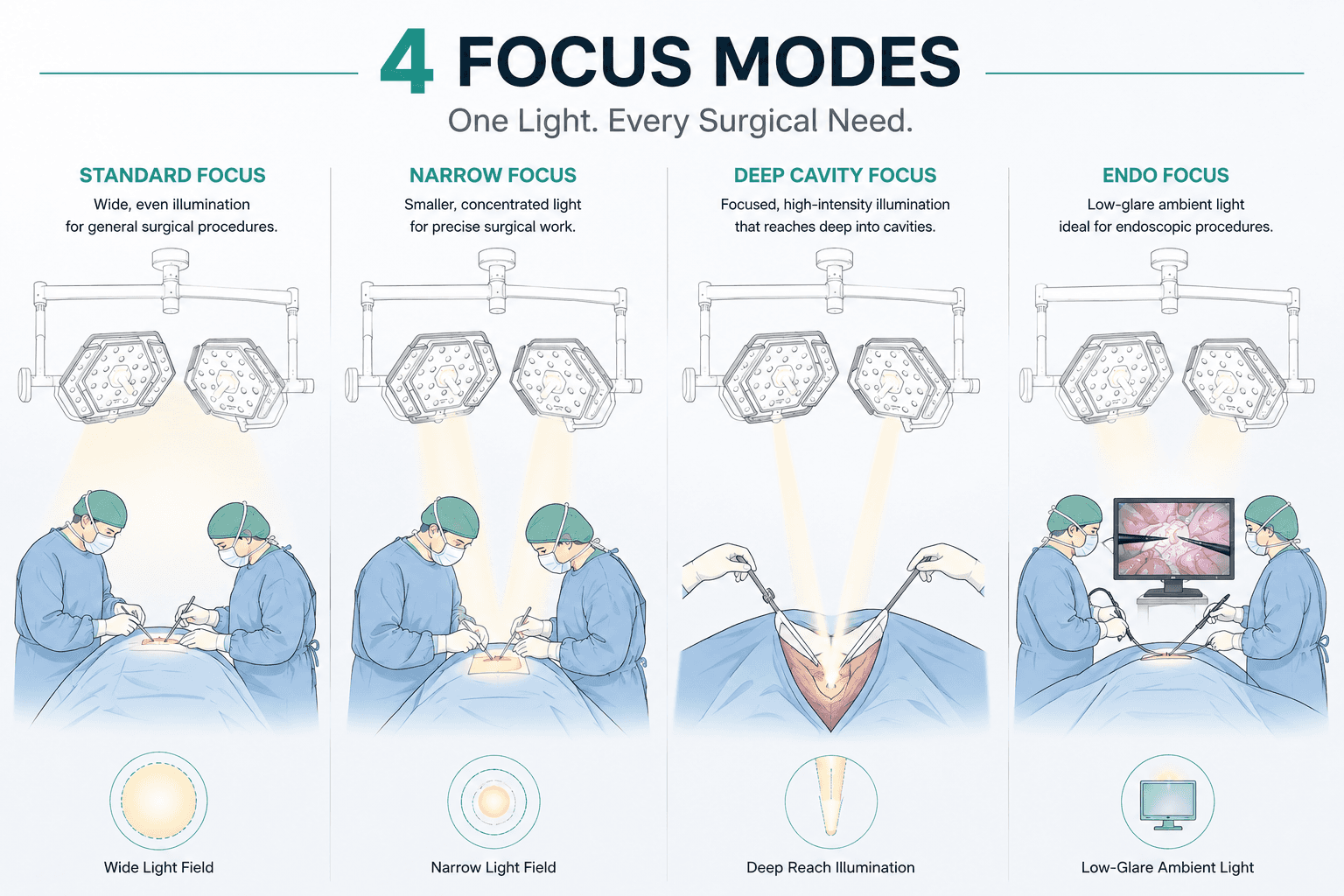
What Are the Different Focus Modes in Modern Surgical Theatre Lights?
What Are the Different Focus Modes in Modern Surgical Theatre Lights?

How Advanced MedTech Solutions Are Improving Surgical Precision and Efficiency
How Advanced MedTech Solutions Are Improving Surgical Precision and Efficiency

How Hospitals Should Evaluate Medical Equipment Before Procurement
How Hospitals Should Evaluate Medical Equipment Before Procurement

C-Arm Compatible OT Tables: What Hospitals Should Check Before Buying
C-Arm Compatible OT Tables: What Hospitals Should Check Before Buying
Products
Get in touch


info@matrixmedicals.in

+91 7304411451
+91 9821235552
Copyright © 2026 Matrix Medicals Pvt. Ltd., All rights reserved.
Products
Get in touch
info@matrixmedicals.in
+91 7304411451
+91 9821235552
Copyright © 2026 Matrix Medicals Pvt. Ltd., All rights reserved.
Contact Us
Contact Us
Contact Us