C-Arm Compatible OT Tables: What Hospitals Should Check Before Buying
C-Arm Compatible OT Tables: What Hospitals Should Check Before Buying

Share:
Share
What Hospitals Need to Know Before Investing in a C-Arm Compatible OT Table
Choosing an OT table may seem straightforward until C-arm imaging enters the picture. A table can be sturdy, comfortable and easy to position, yet still create difficulties when the surgical team needs intraoperative imaging.
For hospitals performing orthopaedic, trauma, spine, urology and other image-guided procedures, C-arm compatibility should therefore be evaluated as more than a feature written on a specification sheet. In fact, official ESIC procurement specifications assess C-arm compatibility alongside radiolucency, longitudinal movement, positioning, load capacity and backup operation.
So, what should hospitals actually check before investing in a C-arm compatible OT table?
What Does a C-Arm Compatible OT Table Actually Mean?
In practical terms, C-arm compatibility means that the Operation theatre table allows the imaging equipment to reach the required anatomy while the patient remains safely positioned for surgery.
This involves more than making the tabletop X-ray translucent. The C-arm needs enough physical space to move around the table, while the design of the tabletop, column and base should support the required imaging positions.
An ESIC technical specification for C-arm compatible tables, for example, specifically calls for a radiolucent tabletop as well as clear access for a C-arm with an image intensifier.
Hospitals should therefore ask a more useful question than “Is this table C-arm compatible?”:
How much practical imaging access will this table give us during the procedures we routinely perform?
Check the Radiolucent Area, Not Just the Word “Radiolucent”
Radiolucency is one of the first specifications buyers should examine.
A radiolucent tabletop allows X-rays to pass through the relevant area with minimal obstruction from the table itself. This can be important when different anatomical regions need to be visualised during surgery.
But seeing “radiolucent” on an OT table brochure doesn't tell the whole story.
Hospitals should understand how much of the tabletop provides usable radiolucent coverage and whether structural components could interfere with the imaging area. The intended procedures should also be considered. The imaging requirements for an orthopaedic case, for example, may differ from those of another surgical specialty.
Official ESIC procurement specifications similarly call for X-ray-translucent or radiolucent tabletops specifically for fluoroscopy with a C-arm.
Look at Longitudinal Slide and Imaging Coverage
Longitudinal slide is one of those specifications that can look like just another number on a datasheet, but it has a practical purpose.
It allows the tabletop to move longitudinally relative to the table base. This can help bring different parts of the patient's anatomy into the imaging field while reducing the need to reposition the entire Operation theatre table.
For example, one ESIC C-arm compatible OT table specification calls for manual and electrical longitudinal displacement of up to 250 mm, specifically connecting this capability with optimised C-arm use and increased working space for the surgeon.
Rather than simply checking whether longitudinal slide is available, hospitals should consider whether its usable range matches their common procedures.
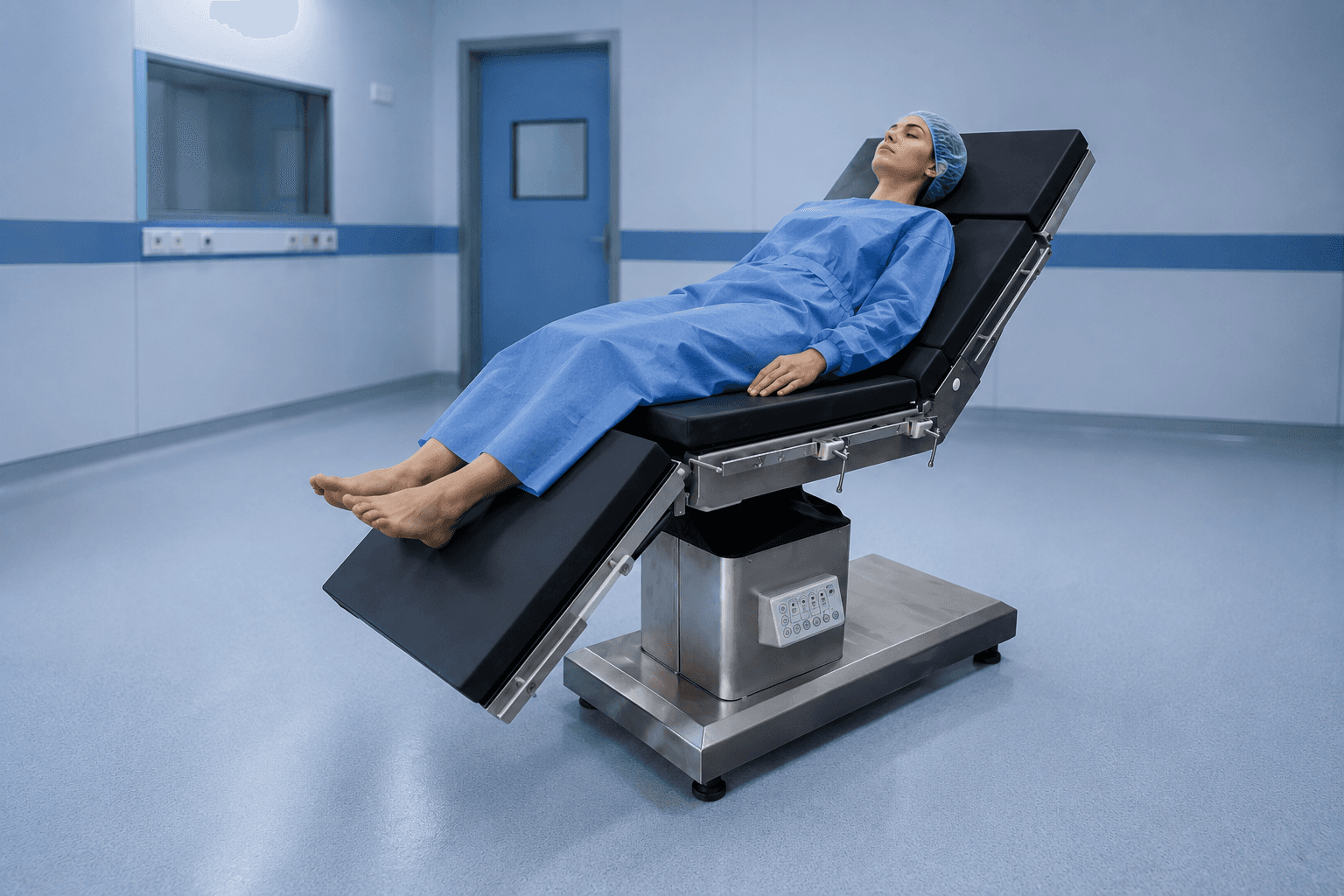
Check Whether the Table Design Provides Adequate C-Arm Access
A radiolucent tabletop doesn't automatically guarantee convenient C-arm movement.
The base, column and other structural elements of the OT table can influence how the C-arm approaches the patient. Limited physical access may mean additional table or patient repositioning during imaging.
This is why C-arm compatibility is best assessed practically.
During a demonstration, hospitals can position their C-arm around the table and simulate the imaging positions they commonly use. ESIC procurement criteria specifically mention clear C-arm and image-intensifier access, showing that physical accessibility is an important consideration alongside tabletop construction.
The question should be simple: Can our C-arm reach the areas we routinely need to image without unnecessary repositioning?
Evaluate Patient Positioning and Table Movements
Imaging capability shouldn't compromise the basic purpose of an OT table: safely positioning the patient and giving the surgical team appropriate access.
Depending on the procedures performed, hospitals may need to evaluate:
Height adjustment
Trendelenburg and reverse Trendelenburg
Lateral tilt
Flex and reflex
Back-section movement
Longitudinal slide
Zero or neutral positioning
Government procurement specifications assess these movements individually, demonstrating why hospitals should look beyond a simple “motorised” or “C-arm compatible” label.
When evaluating a fully automatic OT table, the focus should not simply be on having more powered movements. Those movements should be precise, intuitive and relevant to the procedures performed in that OT.
Don't Ignore Load Capacity, Stability and Safety
An advanced OT table still needs to provide a stable and dependable surgical platform.
Hospitals should look at the specified patient load, locking mechanism, table stability, backup controls and what happens if the primary electronic controls or power source becomes unavailable.
Some ESIC procurement specifications require battery backup, override controls and even manual operation for emergency situations.
There is also an international safety framework specifically for operating tables. IEC 60601-2-46:2023 covers particular requirements for the basic safety and essential performance of operating tables, including tables with and without electrical components.
So when comparing a conventional table with a fully automatic OT table, hospitals should consider not only what the table can do when everything works normally, but also how the design supports continuity when something doesn't.
Look Beyond Specifications: Choosing an OT Table for Long-Term Clinical Use
A good procurement decision doesn't end after comparing radiolucency, C-arm compatibility, positioning angles and load capacity.
An Operation theatre table is a long-term capital investment. Installation, user training, accessories, preventive maintenance, service availability and lifecycle support all affect how effectively that investment performs after it enters the OT.
This is where looking at the complete solution becomes useful.
The Robusta range offered by Matrix Medicals, for example, is available across hydraulic, semi-electric and fully motorised configurations, allowing hospitals to select the level of automation according to their requirements. The range includes C-arm-compatible, X-ray-translucent configurations, along with motorised movements, longitudinal slide, battery backup and manual override on relevant variants.
More importantly, table selection can be matched to the hospital's actual surgical requirements rather than approached as a one-size-fits-all purchase. Matrix Medicals complements equipment selection with pre-sales consultation and support around installation and table configuration, helping hospitals consider the wider clinical workflow when choosing an OT table.
That combination of suitable technology and dependable support can matter just as much as individual specifications over the table's working life.
Conclusion: Evaluate the Table as Part of the Imaging Workflow
Choosing a C-arm compatible OT table requires looking beyond a single line on the specification sheet. Radiolucency, C-arm access, longitudinal movement, patient positioning, load capacity, stability, backup operation and long-term support should all be considered together.
Ultimately, the right Operation theatre table should make imaging easier without making surgery more complicated. Whether a hospital chooses a hydraulic, semi-electric or fully automatic OT table, the goal should remain the same: reliable positioning, practical imaging access and a table that fits naturally into everyday OT workflows.
What Hospitals Need to Know Before Investing in a C-Arm Compatible OT Table
Choosing an OT table may seem straightforward until C-arm imaging enters the picture. A table can be sturdy, comfortable and easy to position, yet still create difficulties when the surgical team needs intraoperative imaging.
For hospitals performing orthopaedic, trauma, spine, urology and other image-guided procedures, C-arm compatibility should therefore be evaluated as more than a feature written on a specification sheet. In fact, official ESIC procurement specifications assess C-arm compatibility alongside radiolucency, longitudinal movement, positioning, load capacity and backup operation.
So, what should hospitals actually check before investing in a C-arm compatible OT table?
What Does a C-Arm Compatible OT Table Actually Mean?
In practical terms, C-arm compatibility means that the Operation theatre table allows the imaging equipment to reach the required anatomy while the patient remains safely positioned for surgery.
This involves more than making the tabletop X-ray translucent. The C-arm needs enough physical space to move around the table, while the design of the tabletop, column and base should support the required imaging positions.
An ESIC technical specification for C-arm compatible tables, for example, specifically calls for a radiolucent tabletop as well as clear access for a C-arm with an image intensifier.
Hospitals should therefore ask a more useful question than “Is this table C-arm compatible?”:
How much practical imaging access will this table give us during the procedures we routinely perform?
Check the Radiolucent Area, Not Just the Word “Radiolucent”
Radiolucency is one of the first specifications buyers should examine.
A radiolucent tabletop allows X-rays to pass through the relevant area with minimal obstruction from the table itself. This can be important when different anatomical regions need to be visualised during surgery.
But seeing “radiolucent” on an OT table brochure doesn't tell the whole story.
Hospitals should understand how much of the tabletop provides usable radiolucent coverage and whether structural components could interfere with the imaging area. The intended procedures should also be considered. The imaging requirements for an orthopaedic case, for example, may differ from those of another surgical specialty.
Official ESIC procurement specifications similarly call for X-ray-translucent or radiolucent tabletops specifically for fluoroscopy with a C-arm.
Look at Longitudinal Slide and Imaging Coverage
Longitudinal slide is one of those specifications that can look like just another number on a datasheet, but it has a practical purpose.
It allows the tabletop to move longitudinally relative to the table base. This can help bring different parts of the patient's anatomy into the imaging field while reducing the need to reposition the entire Operation theatre table.
For example, one ESIC C-arm compatible OT table specification calls for manual and electrical longitudinal displacement of up to 250 mm, specifically connecting this capability with optimised C-arm use and increased working space for the surgeon.
Rather than simply checking whether longitudinal slide is available, hospitals should consider whether its usable range matches their common procedures.
Check Whether the Table Design Provides Adequate C-Arm Access
A radiolucent tabletop doesn't automatically guarantee convenient C-arm movement.
The base, column and other structural elements of the OT table can influence how the C-arm approaches the patient. Limited physical access may mean additional table or patient repositioning during imaging.
This is why C-arm compatibility is best assessed practically.
During a demonstration, hospitals can position their C-arm around the table and simulate the imaging positions they commonly use. ESIC procurement criteria specifically mention clear C-arm and image-intensifier access, showing that physical accessibility is an important consideration alongside tabletop construction.
The question should be simple: Can our C-arm reach the areas we routinely need to image without unnecessary repositioning?
Evaluate Patient Positioning and Table Movements
Imaging capability shouldn't compromise the basic purpose of an OT table: safely positioning the patient and giving the surgical team appropriate access.
Depending on the procedures performed, hospitals may need to evaluate:
Height adjustment
Trendelenburg and reverse Trendelenburg
Lateral tilt
Flex and reflex
Back-section movement
Longitudinal slide
Zero or neutral positioning
Government procurement specifications assess these movements individually, demonstrating why hospitals should look beyond a simple “motorised” or “C-arm compatible” label.
When evaluating a fully automatic OT table, the focus should not simply be on having more powered movements. Those movements should be precise, intuitive and relevant to the procedures performed in that OT.
Don't Ignore Load Capacity, Stability and Safety
An advanced OT table still needs to provide a stable and dependable surgical platform.
Hospitals should look at the specified patient load, locking mechanism, table stability, backup controls and what happens if the primary electronic controls or power source becomes unavailable.
Some ESIC procurement specifications require battery backup, override controls and even manual operation for emergency situations.
There is also an international safety framework specifically for operating tables. IEC 60601-2-46:2023 covers particular requirements for the basic safety and essential performance of operating tables, including tables with and without electrical components.
So when comparing a conventional table with a fully automatic OT table, hospitals should consider not only what the table can do when everything works normally, but also how the design supports continuity when something doesn't.
Look Beyond Specifications: Choosing an OT Table for Long-Term Clinical Use
A good procurement decision doesn't end after comparing radiolucency, C-arm compatibility, positioning angles and load capacity.
An Operation theatre table is a long-term capital investment. Installation, user training, accessories, preventive maintenance, service availability and lifecycle support all affect how effectively that investment performs after it enters the OT.
This is where looking at the complete solution becomes useful.
The Robusta range offered by Matrix Medicals, for example, is available across hydraulic, semi-electric and fully motorised configurations, allowing hospitals to select the level of automation according to their requirements. The range includes C-arm-compatible, X-ray-translucent configurations, along with motorised movements, longitudinal slide, battery backup and manual override on relevant variants.
More importantly, table selection can be matched to the hospital's actual surgical requirements rather than approached as a one-size-fits-all purchase. Matrix Medicals complements equipment selection with pre-sales consultation and support around installation and table configuration, helping hospitals consider the wider clinical workflow when choosing an OT table.
That combination of suitable technology and dependable support can matter just as much as individual specifications over the table's working life.
Conclusion: Evaluate the Table as Part of the Imaging Workflow
Choosing a C-arm compatible OT table requires looking beyond a single line on the specification sheet. Radiolucency, C-arm access, longitudinal movement, patient positioning, load capacity, stability, backup operation and long-term support should all be considered together.
Ultimately, the right Operation theatre table should make imaging easier without making surgery more complicated. Whether a hospital chooses a hydraulic, semi-electric or fully automatic OT table, the goal should remain the same: reliable positioning, practical imaging access and a table that fits naturally into everyday OT workflows.
Article support
Frequently asked questions
Frequently asked questions
Frequently asked questions
What makes an OT table C-arm compatible?
Why is a radiolucent tabletop important for C-arm procedures?
What is longitudinal slide in an OT table, and why does it matter?
What should hospitals check before buying a fully automatic OT table?
Is every radiolucent OT table automatically C-arm compatible?
Share:
Share
RELATED ARTICLES
Read more from our blogs

How Medical Laboratory Technology Is Improving the Speed and Accuracy of Diagnostics
How Medical Laboratory Technology Is Improving the Speed and Accuracy of Diagnostics
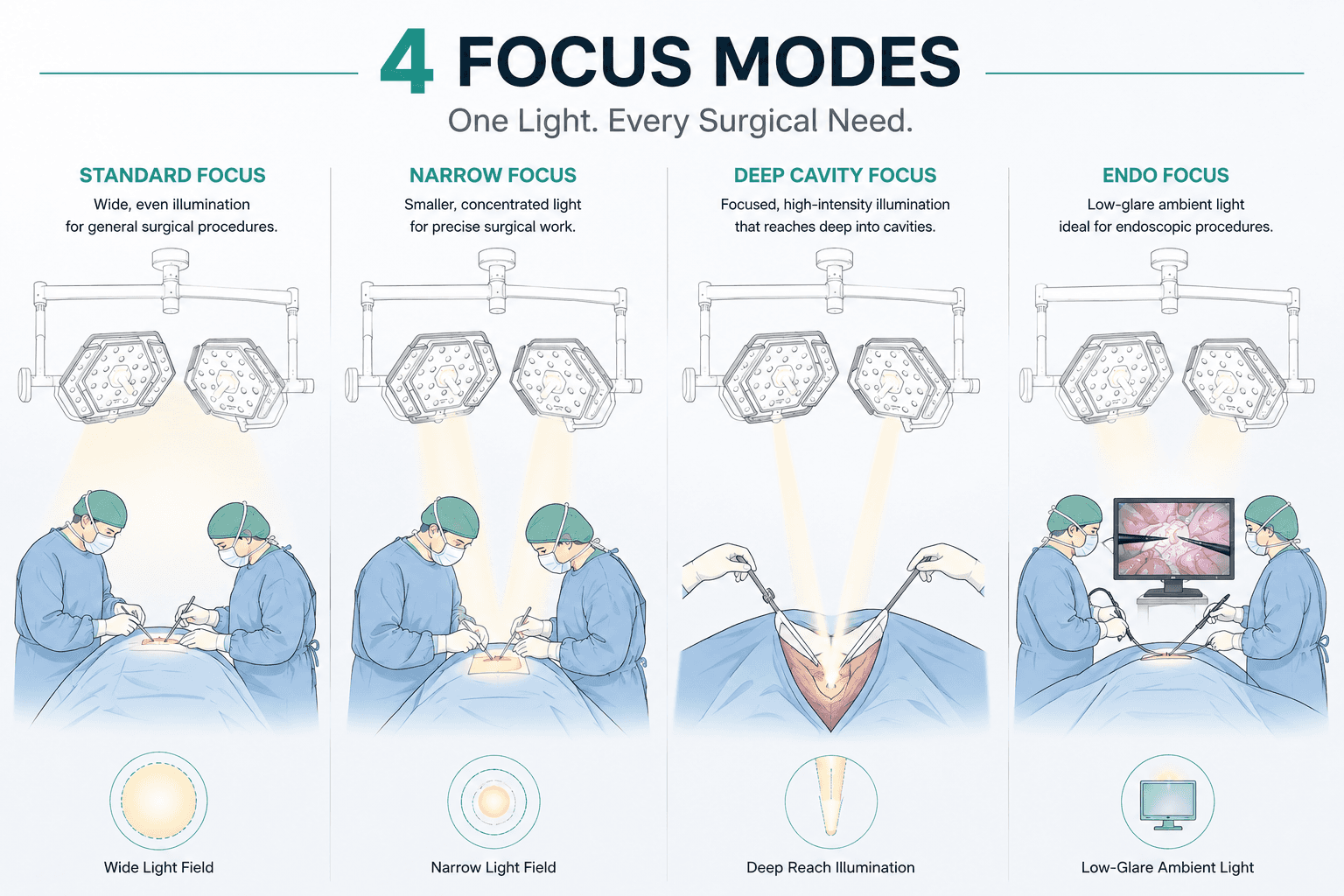
What Are the Different Focus Modes in Modern Surgical Theatre Lights?
What Are the Different Focus Modes in Modern Surgical Theatre Lights?

How Advanced MedTech Solutions Are Improving Surgical Precision and Efficiency
How Advanced MedTech Solutions Are Improving Surgical Precision and Efficiency

How Hospitals Should Evaluate Medical Equipment Before Procurement
How Hospitals Should Evaluate Medical Equipment Before Procurement
Products
Get in touch


info@matrixmedicals.in

+91 7304411451
+91 9821235552
Copyright © 2026 Matrix Medicals Pvt. Ltd., All rights reserved.
Products
Get in touch
info@matrixmedicals.in
+91 7304411451
+91 9821235552
Copyright © 2026 Matrix Medicals Pvt. Ltd., All rights reserved.
Contact Us
Contact Us
Contact Us